



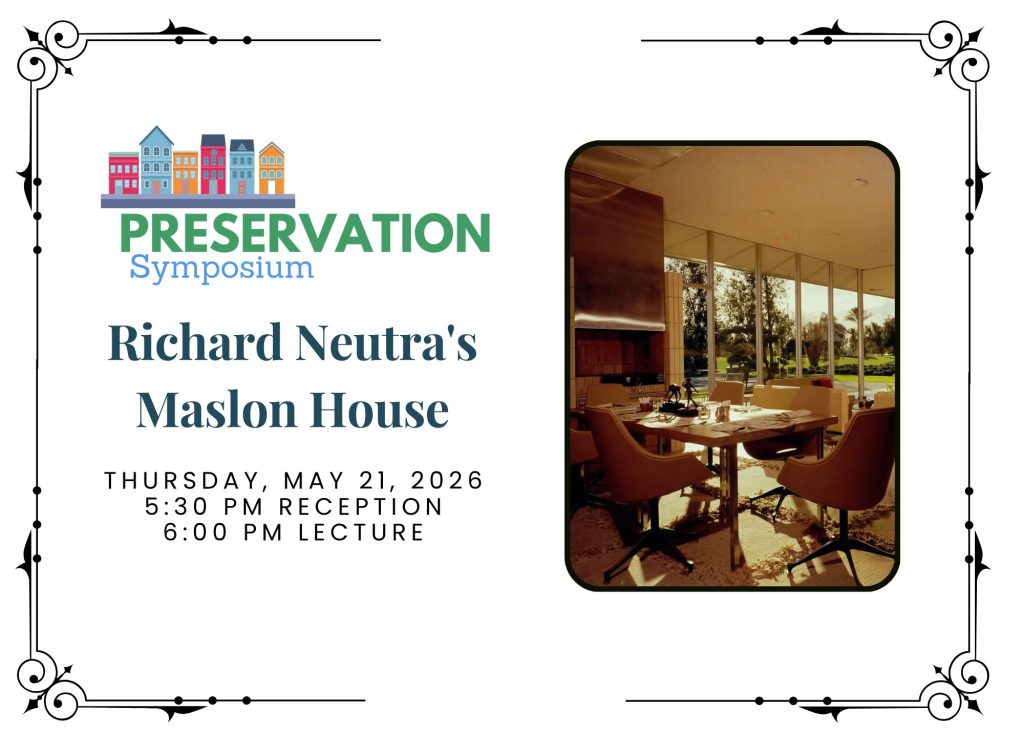
Directors Scott Goldstein and Dave Yakir will screen their acclaimed documentary and discuss the house, the loss, and the preservation movement it sparked at an upcoming Coronado Historical Association event.
When a new owner demolished Richard Neutra’s Maslon House in Rancho Mirage in 2002, the quiet thud of the wrecking ball echoed far beyond the Coachella Valley. The destruction of the 1962 modernist masterpiece, designed for art collectors Samuel and Luella Maslon, set off an international outcry and galvanized a preservation movement that continues to reshape how communities protect their architectural heritage.
More than two decades later, Chicago-based filmmakers Scott Goldstein and Dave Yakir have brought the vanished home back to vivid life in their short documentary, Richard Neutra’s Maslon House. The Coronado Historical Association will host a screening and conversation with the filmmakers at an upcoming event, giving island residents a chance to see the film and discuss the enduring questions it raises about preservation, memory, and the places we choose to keep.
The Film
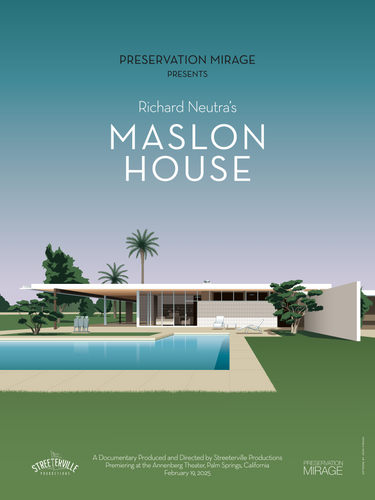
Running 29 minutes, Richard Neutra’s Maslon House chronicles the creation, life, and sudden destruction of one of only three homes the Vienna-born architect designed in the Coachella Valley. Built in 1962 on a 1.5-acre site along the 12th fairway of Tamarisk Country Club, the six-bedroom, 5,000-square-foot home was a showcase for the Maslons’ remarkable modern art collection, with works by Warhol and Giacometti displayed along the home’s long gallery walls. Floor-to-ceiling windows, a low-slung flat roof with deep overhangs, and carefully integrated built-ins made the home appear to float above its desert setting.
Goldstein and Yakir use a blend of family home movies, archival photographs, newly shot footage of the site, and firsthand interviews to reconstruct the house for audiences who will never step inside it. The film features conversations with Neutra scholars and authors including Barbara Lamprecht and Adele Cygelman, designer Brad Dunning, photographer David Glomb, preservationists Peter Moruzzi and Craig Traupane, Rancho Mirage Councilmember Lynn Mallotto, author Melissa Riche, and, most movingly, Hilary Maslon, the granddaughter of the original owners.
The filmmakers have spoken openly about their approach to the story’s structure. Goldstein has compared the opening to the start of Goodfellas, where the audience is shown the crime before learning the backstory that makes it land. In this case, viewers meet the house already gone, then travel back to understand what was lost. The strategy has resonated with audiences and programmers: the film premiered to a sold-out crowd at the Palm Springs Art Museum’s Annenberg Theater during Modernism Week in February 2025, and was later selected for the Palm Springs International ShortFest, The Provincetown International Film Festival, The Newport Beach Film Festival, The Coronado Island Film Festival, GlobeDocs and the Thomas Edison Film Festival.
What elevates the film beyond architectural elegy is its insistence that the Maslon story is not an isolated tragedy. The 2002 demolition was entirely legal. No ordinance protected the home. Out of that loss grew a grassroots effort that eventually formalized as Preservation Mirage, an organization that has since helped drive historic surveys and preservation ordinances throughout the region. The documentary makes a quiet but pointed case that any community with architecture worth caring about, including Coronado, faces the same fundamental question the Maslon neighbors once did: what do we protect, and before it is too late?
The Filmmakers
Scott Goldstein and Dave Yakir are brothers-in-law, longtime collaborators, and the creative team behind Chicago’s Streeterville Productions. Their partnership blends distinct but complementary backgrounds.
Goldstein came up through Chicago’s celebrated comedy and theater world, with directing and performing credits at The Second City, iO Theater (formerly ImprovOlympic), The Annoyance Theater, and Flat Iron Comedy. That training in character, timing, and story shapes his approach to documentary, where he focuses on the human thread running through the architectural history. Goldstein’s connection to the Maslon House is personal: his grandparents lived across the Tamarisk fairway, and the house was the view from their yard throughout his childhood. He also serves as vice president of the board of Preservation Mirage, the nonprofit whose work the film documents.
Yakir brings more than fifteen years of production experience across creative and corporate work. He served as director of photography and editor on Richard Neutra’s Maslon House, and has handled cinematography, editing, and post-production on numerous Streeterville projects. By day he works as a creative director at a technology company, a dual track that has given the duo unusual range and self-sufficiency on independent productions.
Streeterville Productions
Named for the Chicago neighborhood where the partners are rooted, Streeterville Productions was founded so Goldstein and Yakir could pursue passion projects, elevate friends’ work, and stretch beyond the boundaries of their day jobs. The company’s portfolio reflects that range. Earlier shorts include the award-winning The Guitar Thief and the comedy The Improv Guru, featuring a large cast of Chicago improvisers. The pair has also produced viral commercial work, including a widely shared Hamilton-inspired flu-shot video covered by CNN and a collaboration between the Chicago restaurant Daisies and the legendary Wieners Circle.
Richard Neutra’s Maslon House is Streeterville’s first documentary, and the filmmakers have indicated it may be the beginning of a broader body of work on midcentury architecture and the stories behind the homes that shaped Southern California. Goldstein has suggested there are twenty years of similar stories waiting to be told.
The Coronado Screening
The Coronado Historical Association event will feature a screening of Richard Neutra’s Maslon House followed by a conversation with Goldstein and Yakir about the making of the film, the broader preservation movement it helped spotlight, and the lessons a desert tragedy can offer a seaside community with its own irreplaceable architectural heritage.
Tickets are available now at the museum located at 1100 Orange Avenue or online at coronadohistory.org. Tickets are $15 for members and $20 for non-members. Reservations are required, and please be aware that tickets are nonrefundable as proceeds support CHA’s educational mission. If you have any questions, please email [email protected] or call 619-435-7242.