




The agenda for this week’s meeting of the Coronado City Council includes new a new plan for the preservation of historic homes, potential recruitment bonuses for police officers, improvements to the median near the Coronado Shores condominiums, and more. Public comment will be heard.
The meeting is at 4 p.m. on Aug. 19 in the City Council Chamber at 1825 Strand Way, and will be broadcast here. The full agenda is here. A recording of the meeting will be posted here.
Considering new guidelines for historic preservation in Coronado
Part of Coronado’s charm lies in its unique, historic homes, and over the last several years, the city has grappled with the tension between historic preservation, fiscal responsibility, and property rights. An ordinance updating its historic review process for homes will be introduced at Tuesday’s meeting.
Homes designated as historic receive a property tax break under the Mills Act, but they also face restrictions to renovations or demolition.
Currently, the city uses a laborious process to assess the historical significance of a property. All homes 75 or more years old must undergo an individual historic review, which is expensive. Between 2019 and 2023, 122 properties were assessed at a cost of about $863,000. This figure underscores the third prong of the debate: fiscal responsibility.
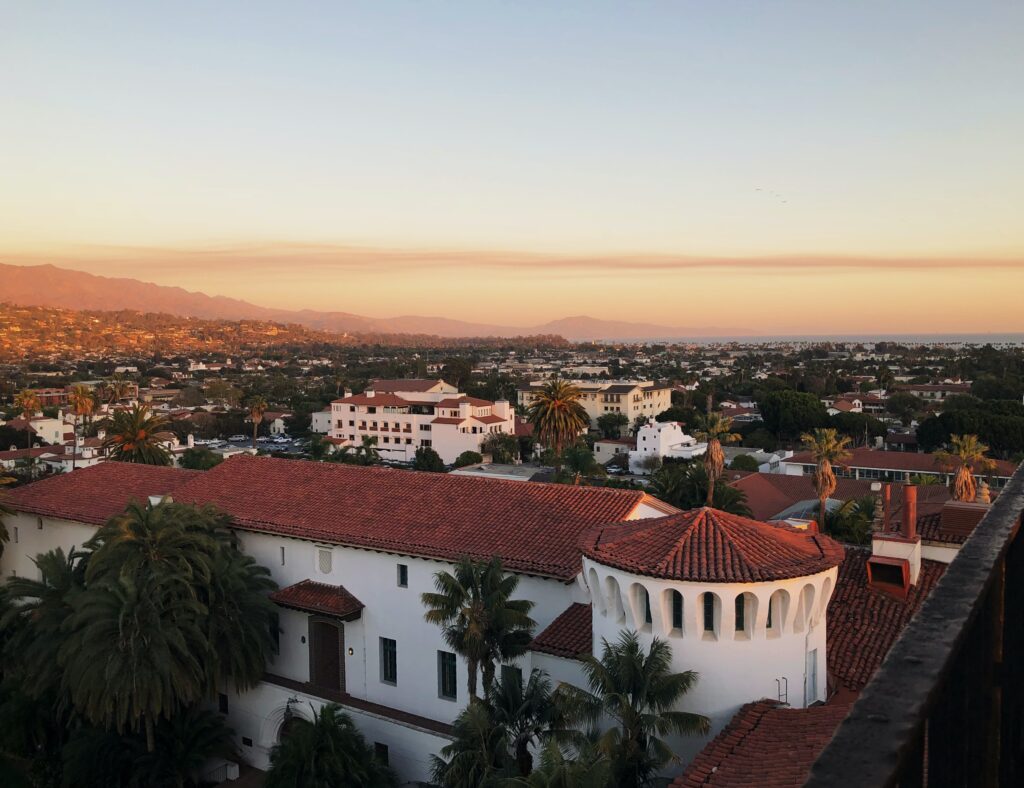
To address this, the council in Dec. 2024 directed staff to draft an updated ordinance, which will be presented and voted on at Tuesday’s meeting. The proposed plan includes an updated historic context statement (read it here) and will use survey data to exempt certain properties from individual historic review.
The survey considered observable features of homes in the Village built through 1970, evaluated them for architectural significance, and divided them into three tiers. Tier one properties are unaltered or minimally altered structures that may be eligible for historic designation and comprise 184 properties; tier two properties are somewhat altered and not currently eligible for historic designation — 140 properties; and tier three are substantially altered and not eligible for historic designation. There were 1,662 properties identified as tier three.
Under the new plan, tier three properties would be exempt from the historic review process, even when they reach 75 years of age. The goal, supporters of the plan say, is to save money and time. However, this has been a much-debated topic in past years, with supporters saying it saves time and city resources and critics saying the survey approach might miss historic properties that deserve to be preserved.
About 130 properties were not assigned a tier during the survey, either because they were not sufficiently visible from the street or because a determination could not be made. Those would be subject to the determination of historical significance process as they came of age.
Safety, aesthetic, and infrastructure changes near the Shores
The council will consider removing a crosswalk due to safety concerns and whether to include additional improvements during scheduled upgrades to the median near the Coronado Shores condominiums.
As a part of 2020 beautification initiative, Coronado is upgrading the median on State Route 75 from Pomona Ave. to Avenida de las Arenas. Improvements include new, drought-tolerant landscaping, drip irrigation systems, and LED streetlights. Power systems will also be converted from high- to low-voltage.
The council will consider removing a crosswalk at the north end of the SR-75 and Avenida de las Arenas intersection. Upon review, staff identified a visibility concern for drivers turning left from Avenida de las Arenas, causing a risk to pedestrians. The crosswalk’s angled design also does not meet current design standards. The California Department of Transportation (Caltrans) has tentatively approved the removal of the crosswalks, contingent on the installation of pedestrian barricades at each ramp into the street. Removing the crosswalk will cost about $10,000.
Two additive projects will also be considered. The first would extend landscaping and irrigation improvements from Avenida de las Arenas to Rendova Road, for an additional $263,520.
The second proposed additive project would widen the median area in front of the community pool to replace unused pavement with landscaping. It would also install drainage to address water ponding in the area. This added project would cost an estimated $408,174.
The beautification project, with or without these changes, is slated to begin in the second quarter of 2026 and projected to take six to eight months to complete. No nighttime construction is expected. The city has already spent about $228,000 of its design allocation of $440,000. The base construction estimate is about $979,000. With both additives, the new estimated cost is $1.65 million.
The council will vote on the crosswalk removal and the two proposed additive projects. It will also vote on whether to advertise the project for bids.
Approving a police officer recruitment bonus
The Coronado Police Department is short on officers and is having difficulty filling the positions, so the council is expected to approve a pilot bonus program for recruitment. Currently, the police department has seven vacancies (of 46 positions).
Eight other law enforcement agencies in San Diego County offer recruitment bonuses, and a staff report suggests that if Coronado does so as well, it may have an easier time attracting new officers. If approved, a lateral police officer will be granted a bonus of $20,000, while a police academy graduate will be awarded $10,000. CPD will also offer a $2,000 referral bonus.
If approved, the bonuses will apply to officers joining the department between July 1, 2025 and June 30, 2027. The program is expected to cost about $55,000 in its first year to account for all vacant positions. The matter is on the council’s consent agenda, implying expected passage.
Temporarily granting military families a resident rate at the community pool
Coronado grants resident benefits to its citizens, including a discounted rate to use the city’s aquatics center. To qualify, an individual must provide a property tax record, utility bill, or rental receipt or lease.
Those who live in military housing in Coronado qualify, but many sailors stationed at Naval Base Coronado commute to city. The outdoor pool at the Naval Amphibious Base Coronado was closed July 25 for renovations, a project that is expected to take six months. Meanwhile, utilization of the city’s pool is well below capacity.
Therefore, the city is poised to temporarily qualify active duty military personnel and their families for resident rates at the aquatics center. This policy change will remain in effect until the base pool reopens in January.
The matter is on the council’s consent agenda, and therefore, is expected to pass. The daily drop-in fee for an adult is $8 for a resident and $16 for a nonresident; a daily drop in for a family of four costs $20 for residents and $40 for nonresidents. All fees are outlined here.
An update on the ongoing Tijuana sewage crisis
The City Council hears regular updates on the efforts to curb the ongoing Tijuana sewage crisis, including a status update on the South Bay International Wastewater Treatment Plant, which is currently being expanded and rehabilitated.
Earlier this year, the Environmental Protection Agency (EPA) announced an expedited, 100-day timeline to expand the plant by 10 million gallons per day (MGD), increasing its current capacity of 25 MGD to 35. By that timeline, the plant’s initial expansion should be complete by Aug. 28. Ultimately, the plant will be expanded to 50 MGD.
In addition to an update on the plant’s expansion, the council is expected to hear an update on next year’s funding for the International Boundary and Water Commission (IBWC), which oversees sewage infrastructure in the US.
On May 30, the Trump administration released its FY26 Discretionary Budget Request, which included $50.3 million in construction funding for the IBWC — a $17.6 million decrease from this year. In response, Coronado sent a letter requesting its current budget be matched.
However, the IBWC’s construction allocation was increased to $78 million — the same as the 2025 allocation — in a draft budget from the House Appropriations Subcommittee on National Security, Department of State, and Related Programs. The House Appropriations Committee approved it on July 23.
However, this budget is not final. It still must be passed by the entire House, and companion legislation would also need to be passed by the US Senate. If there are differences in the amount appropriated, the House and Senate must agree before the final budget legislation is signed by the president.
The City Council hears an update on the cross-border pollution once per quarter.
Public hearing: building permit fees
In April, the city approved its annual adjustments to fees for police, emergency medical services and ambulances, community development, recreation, wastewater capacity, and special events. These adjustments are based on the Consumer Price Index (CPI) and the Construction Cost Index (CCI). Those based on the CPI were adjusted by 3.1 percent, while CCI-based fees were increased by 4.19 percent.
However, during the public hearing approving these increases, building permit fees were accidentally omitted from the exhibits presented to the public, though they were included in the resolution. State law requires that these fees be approved during a public hearing, so the council will hold a one for its building permit fee increase. The new fee schedule is here.
Updating the city’s Sewer System Management Plan
By state law, cities in California must update their Sewer System Management Plans (SSMP) in light of new waste discharge requirements passed by the state in 2022. Coronado has until Aug. 2 to pass a new SSMP.
The city has already submitted the draft of its new plan to the state, and the City Council will decide whether to adopt it. Key changes include more rigorous capital improvement planning and design standards, increased training and public education, updated spill response procedures, and expanded legal enforcement powers. The full plan is available here.
Potential consideration of the city’s emergency notification system
In a Policy No. 2 request, Councilmember Amy Steward requested that the city’s emergency notification systems and protocols be placed on a future agenda for discussion and possible action. No action will be taken at this meeting; the council will simply vote on whether to consider the matter at a future date. Steward referenced the recent tsunami advisory in Coronado, as well as the July floods in Texas, as reasons to consider Coronado’s protocols and systems.