



A photograph tucked into an old family album, a program saved from a championship season, or a hospital brochure stored away in a box may seem like ordinary keepsakes. But together, these items can help tell the story of Coronado.
Everyone in the community is invited to search their homes for photographs, documents, memorabilia, and personal recollections as part of two community collecting initiatives focused on different, but important chapters of the community’s rich history: the history of Coronado water polo and 100 years of healthcare in Coronado.
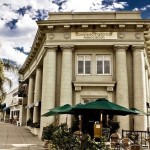
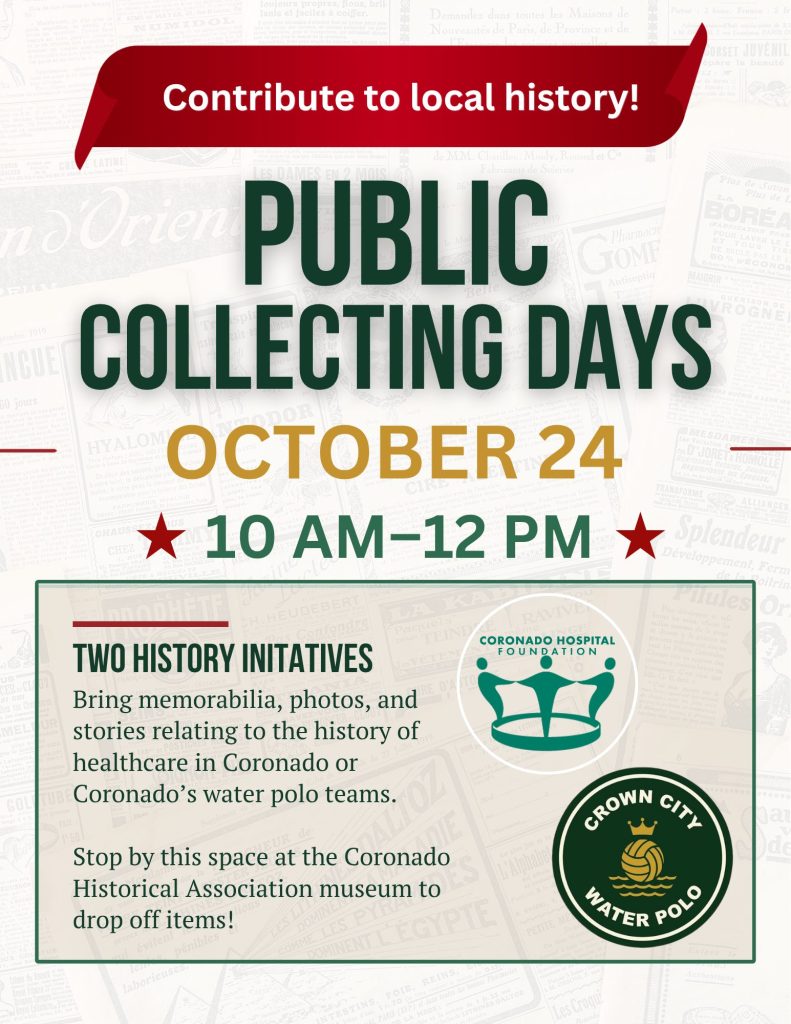
The two initiatives, spearheaded by the Coronado Historical Association, will give community members an opportunity to share and archive materials that document the people, places, events, traditions, and experiences that have shaped these two areas of local life. Public Collecting Days will be held at CHA’s museum throughout the fall, where dedicated volunteers will be on site to review and collect items. Dates for the collecting days will be listed on CHA’s website, coronadohistory.org, and contributors who can’t make it are encouraged to call CHA’s office at 619-435-7242. The next date is Saturday, Oct. 24, 10 a.m. to noon.
For the water polo project, CHA is partnering with Crown City Water Polo, which is looking to build a comprehensive record of the sport that has played an important role in Coronado’s athletic history since 1968. The collection will focus not only on championship seasons and notable achievements, but also on the everyday experiences of the players, coaches, families, and fans who made the sport part of the community. The collection will be used to put together a reflective storybook about water polo history produced by Crown City Water Polo.
Residents are encouraged to bring items such as team and individual photographs, game and tournament programs or video footage, team rosters and schedules, trophies, medals, caps, uniforms, equipment, and other memorabilia. Personal stories and memories are equally important, offering perspectives that may never have been captured in official records. Those who have materials or memories related to Coronado water polo can begin the process by filling out the digital collecting form provided by CHA or by stopping by the museum on one of the Public Collecting Days.
The 100 Years of Healthcare project takes an equally meticulous look at the community’s past, with the goal of documenting a century of island healthcare and the people who have cared for local residents. In partnership with the Coronado Hospital Foundation, CHA is developing the collection to be used in a retrospective exhibit scheduled to open in early 2027.
Among the materials being sought are photographs of the hospital through the years, particularly images of the hospital when it was located at 1111 Orange Avenue. CHA is also interested in photographs, film, or information about clinics and medical offices, as well as images of doctors, nurses, staff, patients, and community health events. Brochures, newsletters, pharmaceutical items, or historic medical equipment and instruments are also welcome, as they can help establish how healthcare was practiced and how services changed over the decades.
Contributors to either of these two projects do not need to own a rare artifact or historically significant-looking object to make a meaningful contribution. Some of the most useful pieces of history may be everyday items that have been saved simply because they meant something to a family. Residents are encouraged to bring in materials even if they are uncertain about their historical value. The collecting team will review the items and discuss how they might contribute to the museum’s collections.
Items can be donated to the museum collection or, in some cases, loaned so they can be documented and then returned to their owners.
The success of these two collecting initiatives counts on the people who have lived, worked, and participated in Coronado’s community life. By sharing those tangible pieces of the past, residents can help create a more complete record of the community. Be sure to visit the museum during the collecting days.