




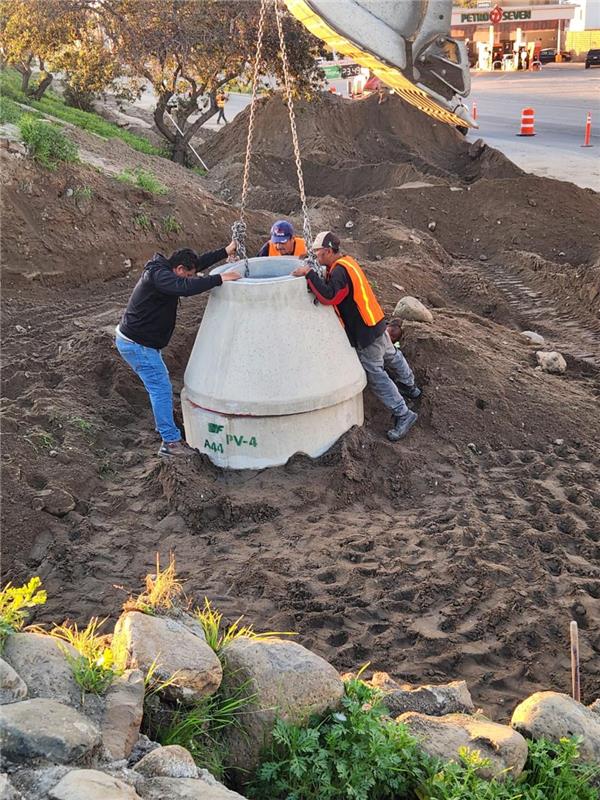
A major sewage pipe in Tijuana is repaired after it collapsed last week, pushing 11.5 million gallons per day (MGD) of sewage into the Tijuana River.
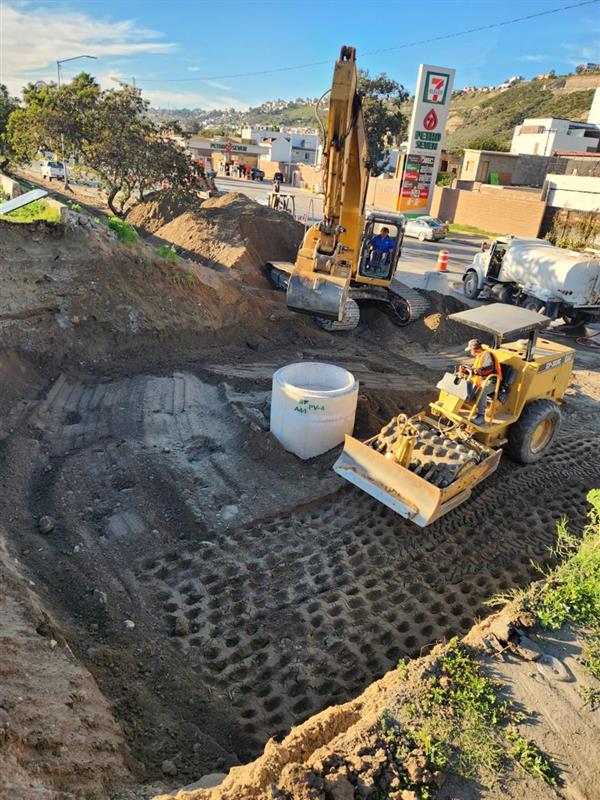
Repairs and reconstruction of a collapsed well and manhole servicing the Insurgentes Collector were completed Jan. 19, according to Mexico’s Comisión Internacional de Límites y Aguas (CILA).
Testing and inspection are in progress to ensure the collector is operating properly.
The initial spill occurred late on Jan. 15, and additional wastewater was diverted into the Tijuana River as crews worked to address it.
The Insurgentes Collector carries sewage from residential neighborhoods to treatment facilities and is approximately five kilometers long.
The collapse came as the US and Mexico work to address the decades-long Tijuana sewage crisis. Millions of gallons of untreated sewage are pushed into coastal waterways each day due to crumbling infrastructure on both sides of the border. The Insurgentes Collector pipeline added to this daily flow.
Both countries are working to rehabilitate and expand failing infrastructure in effort to solve the problem. The flagship project for the US is the expansion of the South Bay International Wastewater Treatment Plant, which previously treated 25 million gallons (MGD) per day. Last year, it was expanded to 35 MGD, two years ahead of schedule, and it will ultimately treat 50 MGD.
Mexico has expanded its San Antonio de los Buenos (SAB) Wastewater Treatment Plant, which now has a capacity of 18 MGD, roughly a third of Tijuana’s sewage flow. It is also rehabilitating its International Collector, which brings sewage from Tijuana to the South Bay treatment facility.
Last month, the US and Mexico executed a new treaty minute that aims to address future population growth and curb the problem. Under the agreement, Mexico will conduct feasibility studies to evaluate construction of an ocean outfall at the SAB Wastewater Treatment Plant and expansion of the SAB plant from 18 million gallons per day to 43 MGD.
Mexico also agreed to construct a sediment basin in Matadero Canyon (also known as Smuggler’s Gulch) before the 2026-27 rainy season, a project intended to reduce the flow of sediment across the border. Sediment flows from Mexico have long plagued international wastewater treatment infrastructure in the US.
At the time of publication, Coronado’s beaches are closed from the Silver Strand Shoreline through the Coronado Shoreline, and have been since December 2025. Beach closures are updated here.