




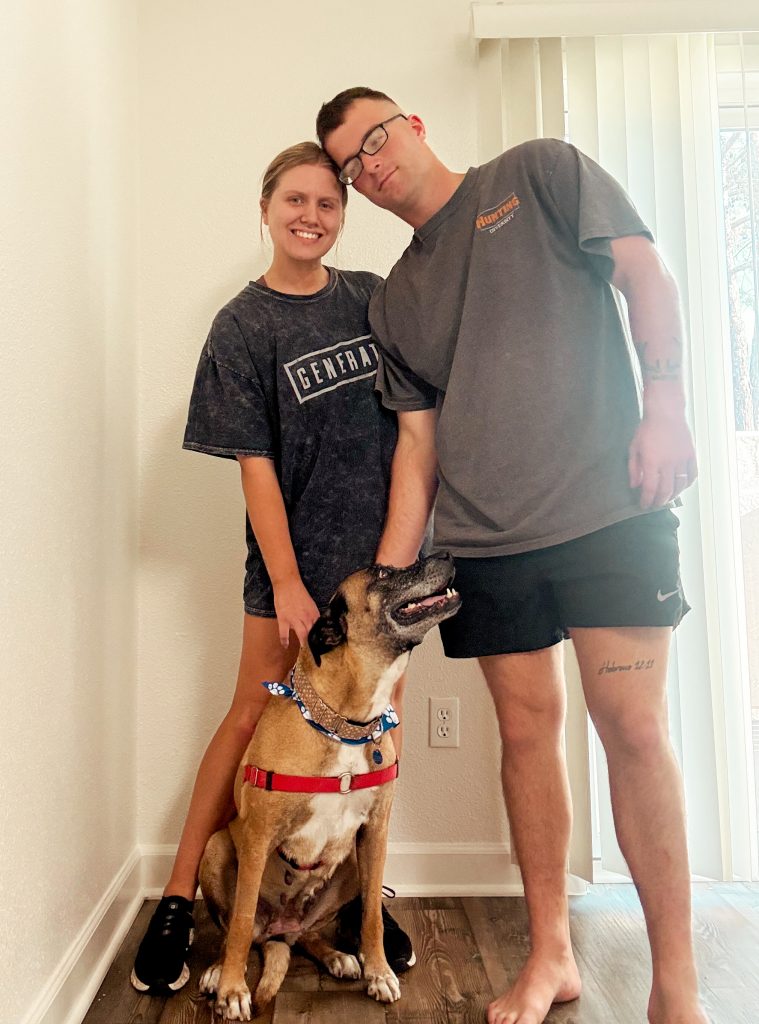
It’s not something most animal shelters are equipped to do. When Ginger, a six-year-old Shepard mix, came to PAWS last December, not only was she pregnant…she was suffering from cancer. Most shelter dogs wouldn’t survive this disease as it is expensive and timely to treat. Many facilities would resort to euthanasia.
But this was not Ginger’s fate.
Dr. Barbour, the PAWS in-house vet, was able to cure the cancer after seven weeks of treatment. Today, Ginger is cancer-free. The best part? She was adopted.
“Ginger is such a loving and happy dog,” said Kimsey Vise, who adopted Ginger last month with her husband. “She has really made our lives so much better.”
It’s a happy ending that wouldn’t have happened without support for PAWS from the community. Dr. Barbour said her story could have been very different.
“This particular cancer is listed as ‘unhealthy and untreatable’ because most shelters aren’t going to attempt chemotherapy,” said Dr. Barbour. “Most shelters don’t have the funding or the resources. But when treated, it has a high success rate. So I decided to treat her.”
It all started in December when Ginger was found wandering the streets in Coronado, clearly pregnant, and not in great shape. She was skinny and had fleas and ticks.
But PAWS got her cleaned up and she went into foster, giving birth to six healthy puppies who were all spayed, neutered and adopted. While things were going great for her offspring, there was something wrong with Ginger.
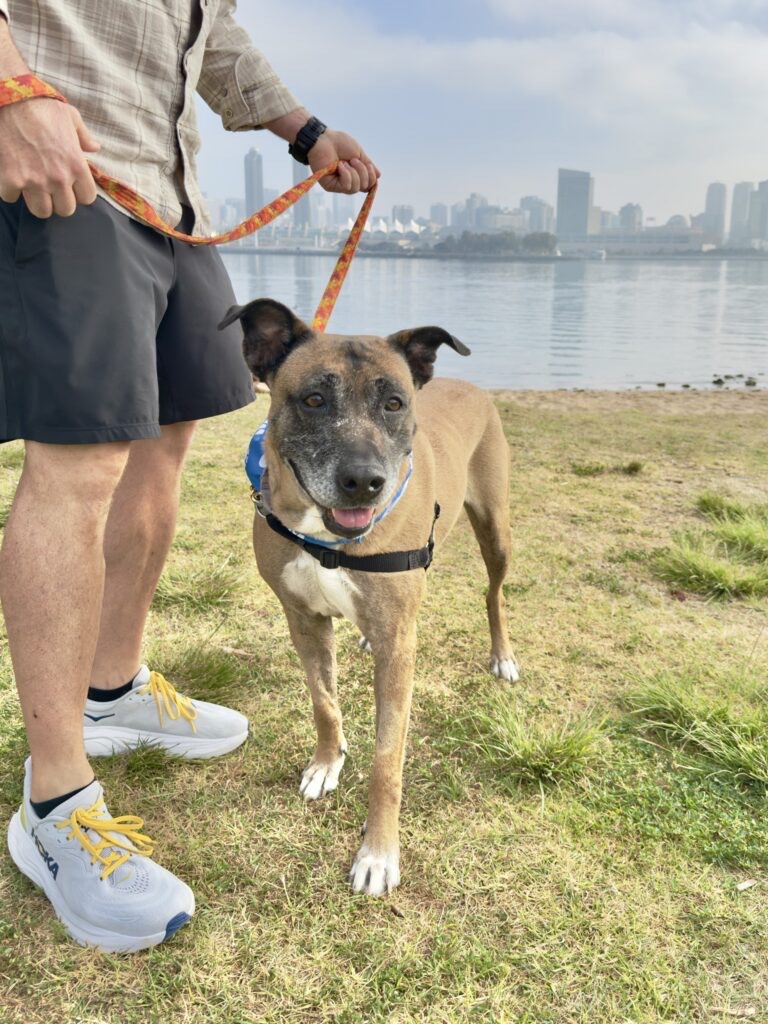
“She was having some abnormal urination,” said Dr. Barbour. “We did some diagnostics and found a mass in her urogenital track.”
He knew what it was right away. And it wasn’t good.
“Unfortunately, I’d seen it before,” said Dr. Barbour. “It was a highly-transmissible venereal tumor (TBT). I was able to confirm that in-house with our microscope by making a simple slide prep.”
This type of cancer is rare because it can actually be spread from one dog to another. There is no vaccine. But there’s good news…healthy pets aren’t usually at risk.
“These aren’t the kinds of diseases we see in the kind of dogs you run into at the dog park,” said Dr. Barbour. “If the dog is getting a certain level of care, eating nutritious food, and in good body condition, this disease is less of a threat.”
But dogs with compromised immune systems — such as those that are abandoned, and are found wandering the streets — are far more likely to get infected.
“If you’re a starving dog on the side of the road, and you’re fighting off parasites, and maybe trying to recover from parvo, your immune system is shot, then this little tumor comes across you, it’s going to stick and stay there, versus a dog with a healthy immune system,” he said.
For Dr. Barbour, the decision to try to treat Ginger was easy.
But it took some prep work. He had to ensure that Ginger’s blood platelet counts were okay. Then she had to get spayed. Then, she got started on a weekly infusion of chemotherapy. It’s not without its risks.
“You have to make sure you’re handling it carefully and it has to be given intravenously because if you don’t get it, or it goes under the skin or around the vein, it can cause some pretty severe skin problems,” said Dr. Barbour. “I’ve heard of dogs losing their legs.”
But Ginger had a very positive response after the first infusion.
“She tolerated the drug well,” said Dr. Barbour. “Her blood counts were steady, and her organ health was fine the entire time.”
After seven infusions, Ginger is now cancer-free — thanks to support from the City of Coronado and generous donations from residents and local businesses.
“For the most part, most shelters, especially when you get into other places besides San Diego, are not going to be able to treat this,” said Dr. Barbour. “It’s not that they don’t want to, or that the dogs there don’t deserve it. It’s just that many places are over-capacity, and it’s not feasible for every shelter.”
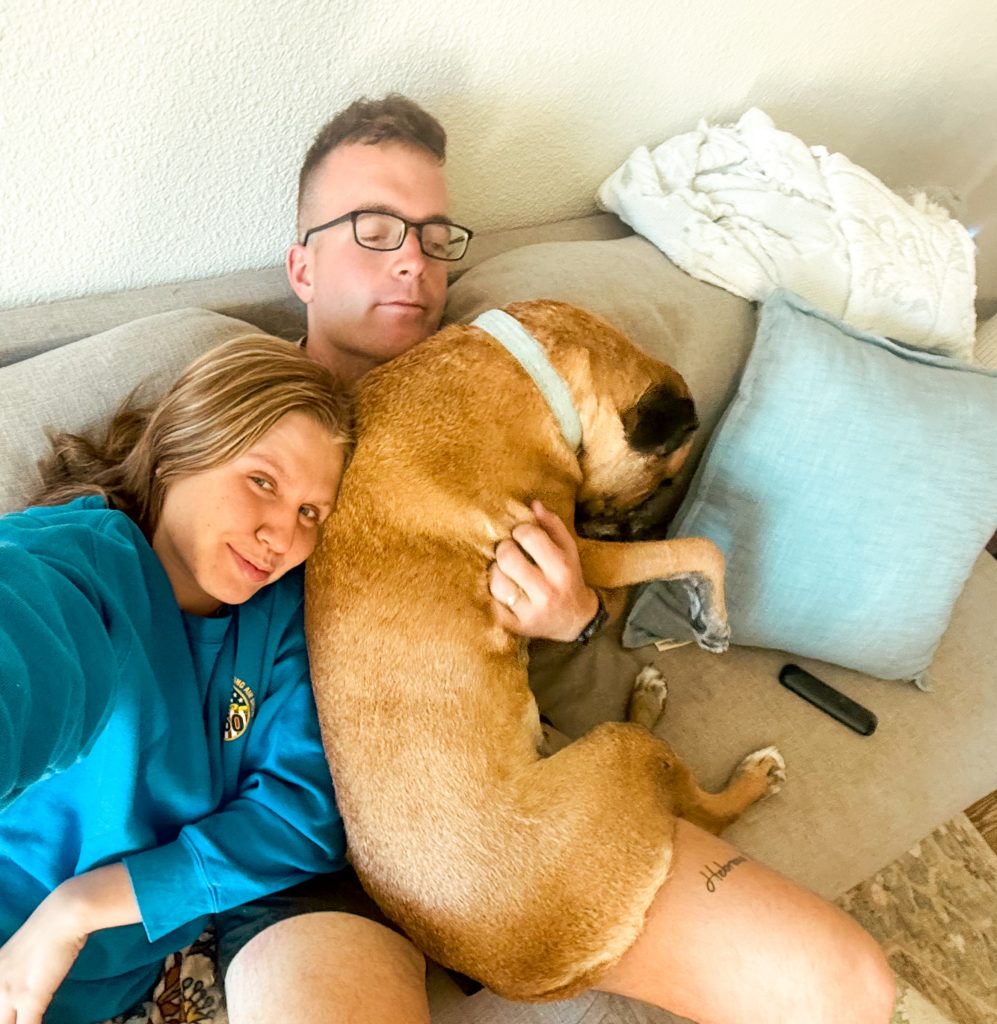
Dr. Barbour says that community support in the form of donations, or participating in PAWS programs like the Furever Fund, in partnership with the Coronado Community Foundation, can help save animals like Ginger.
“Even if people can’t donate money, they can donate time, and make their home open to foster care,” said Dr. Barbour. “It doesn’t even have to be here on the island. Fostering is an incredible resource and a great way to make something like this happen.”
For Ginger’s new mom, Kimsey Vise, the dog’s resilience was part of her allure. After all, Ginger spent two months in cancer treatment…in quarantine.
“I heard about her when I came to the shelter, and I was just shocked at her story because she’s such a happy and loving dog,” said Vise. “This just goes to show how strong she is.”
It didn’t take long for Ginger to get used to her new family.
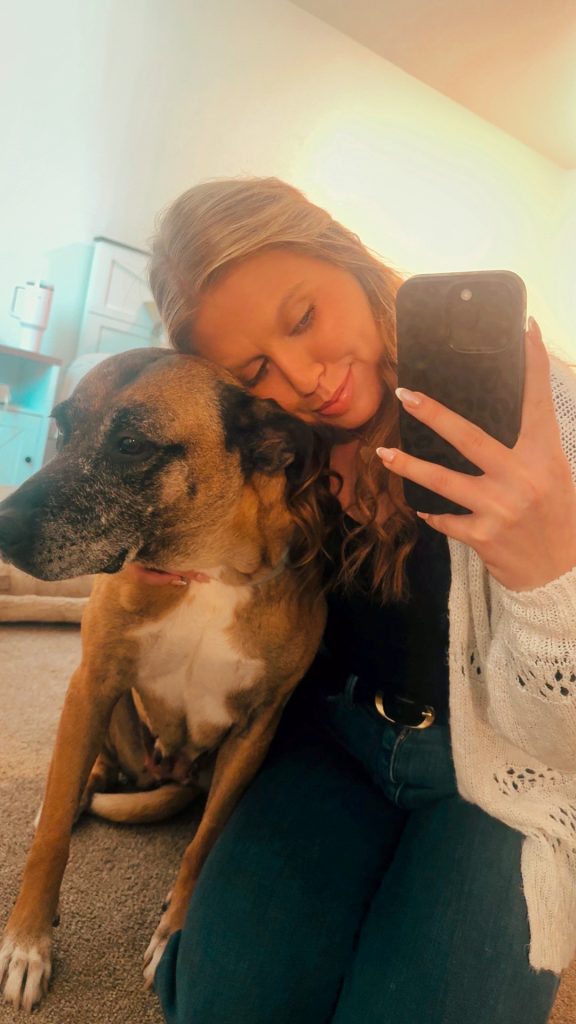
“Ginger has adjusted really well and loves her treats, walks, and cuddles,” said Vise. “I’m so glad we finally gave her a place where she can be loved.”

Coronado has one of the most skilled and caring veterinarians in all of SoCal. Dr Barbour always goes “above and beyond” when caring for our animals. He deserves the highest praise from our town.
Dr. Barbour is one of the best and most caring veterinarians I’ve ever known. He always has, and continues to go “above and beyond” in his care for all animals. His skill and compassionate professionalism need more recognition within the Coronado community. He’s one of the BEST.
I foster Ginger a couple weeks ago. She’s the sweetest dog you’ll ever meet even having been through so much. I’m so happy to see that she was able to be adopted and can finally live her best life. Give her lots of love for me.
I’m so glad that people came to her aid not just in funds but with love and kindness. This Vet is amazing and it’s good to know something like this can be treated and he was able to cure her. My hat’s off to the adoptive parents for giving her a loving home. And Ginger, may you have a great rest of your life! Sending sweet kisses to you girl.
Tears came to my eyes reading this amazing article. I was so happy when Ginger was adopted .. and now to see her wonderful owners and seeing her so happy.
Such a beautiful story!!! And the couple to adopt her her are very special people!!! Thank u to everyone involved!!!!