




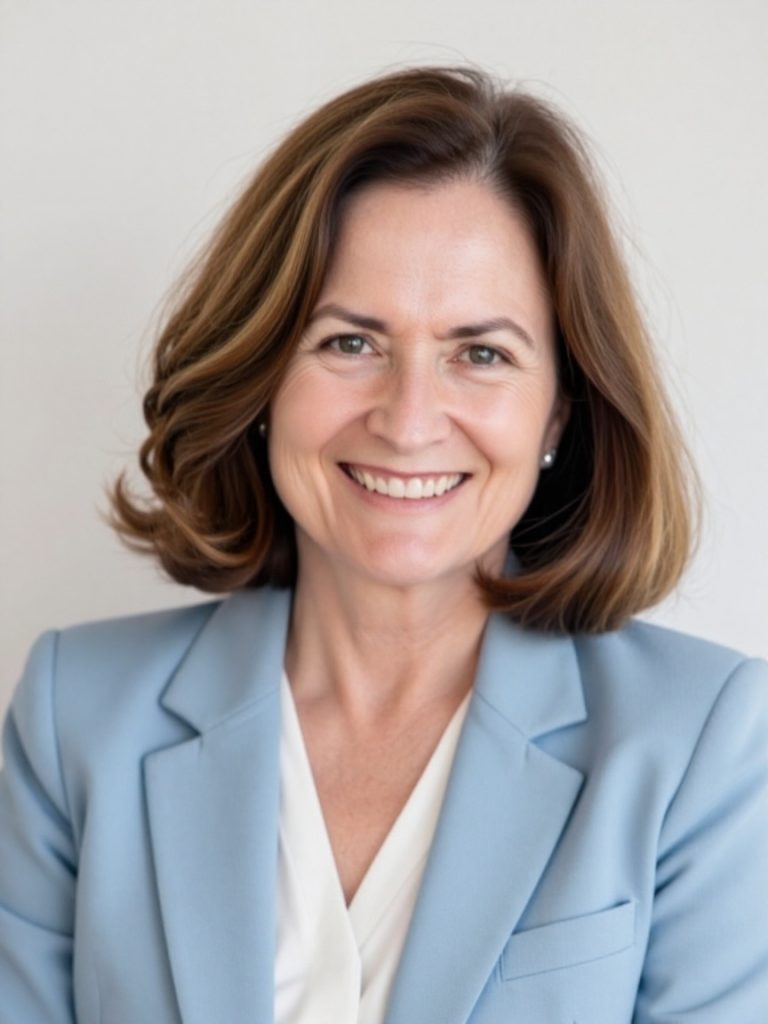
 Kelly Purvis was ready to retire.
But then, sitting in a City Council meeting in late 2024, she and a colleague listened to a parade of people speaking about what kind of person should be appointed to an opening on the council.
Her colleague turned to her: “You have to apply.”
“Absolutely not,” she said. But then her phone started to ring.
Purvis ultimately did apply for the vacancy, which was created after then-Councilmember John Duncan won the mayoral election in 2024, leaving his seat open. The council decided to fill the position by appointment, not by election, and Purvis was selected.
Before applying for the council position, Purvis worked for the city for 11 years. She’s lived in Coronado for four decades. Her tenure working under three separate city managers informed the council’s decision to appoint her over nine other applicants.
Purvis was pleased, and initially, she thought she would sit on the council for two years, hoping to bring “experience, history, and a calm” to the dais. But as this year’s election crept closer, she decided to run for one more term.
“There’s still work to finish, and there’s some really important things coming up,” Purvis said.
One of those things: the next cycle of California’s Regional Housing Needs Allocation (RHNA), in which cities must rezone for more housing in a bid to address statewide housing shortages. Other concerns include addressing the Tijuana sewage crisis and public safety infrastructure.
Housing allocations and Coronado’s character
Purvis is blunt about her opinion of the housing allocation Coronado received in its last RHNA cycle.
“The 912 number, in my opinion, was unrealistic,” Purvis said. “Coronado is very built out, and we have another housing cycle coming up fast.”
Coronado embarked on a yearslong saga during its last housing element. City leaders said its allocation was unfair and submitted a housing element plan including just over a third of its allocation which the state rejected.
Coronado and several other small cities filed a lawsuit after receiving their housing allocations, saying the San Diego Association of Governments gave an unfair allocation in a controversial weighted vote. The city lost, and then lost an appeal. The city brought its case to the California Supreme Court, which opted against hearing the case.
In December 2022, the HCD warned the city that it must comply with its housing element allocation or face legal action. In 2024, Coronado finally, a bit begrudgingly, passed a compliant housing element.
But Purvis notes that finding space for all 912 units required by state (plus a 15 percent buffer, pushing the total to 1,049) was extremely difficult, and a new allocation is coming.
Purvis wants to use a combination of coalition building and policy advocacy to secure a more realistic allocation for the next cycle. She’s using her seat on the CalCities housing and economic development committee to work with other built-out, coastal cities facing the same RHNA challenges. Together, similar cities can make more of a difference with the state than alone, she said.
She intends to work directly with the state’s Department of Housing and Community Development and SANDAG. She’s interested in exploring a regional trade-off model, in which Coronado could contribute to housing numbers in communities like Santee, who are actively trying to add housing, rather than being forced to absorb housing units Coronado has no place to build, in a community where affordable units don’t pencil out for developers.
In 2025, despite zoning for new housing, Coronado built just 37 new housing units, and none of them were affordable. Meanwhile, Santee Mayor John Minto said during a 2024 SANDAG meeting that his city was trying to develop 2,600 acres of land and he would be open to absorbing more of the region’s housing allocation.
Purvis said an approach to housing must also protect the charm of Coronado, resisting tall condo projects that the city’s infrastructure and look cannot accommodate. She said her experience as volunteer vice-chair of the city’s R-4 Zoning Committee will inform that work.
Treating Tijuana’s sewage
Purvis said she’s learned a lot about water during her tenure on the council by serving as the city’s representative on the Metro Wastewater Joint Powers Authority Board of Directors.
Her central worry isn’t just the current cross-border pollution crisis, but what happens as Tijuana continues to grow in both population and sewage output.
She’s intrigued by potable reuse, or treating wastewater to drinking-water standards rather than simply discharging it once it clears a lower bar. She floated the idea of building a pure water facility somewhere in the county, tying the region’s sewage problem directly to its water supply problem. With the Colorado River increasingly unreliable as a long-term source, a market could emerge for recycled wastewater.
“We’re going to run out of water,” she said flatly. “Cleaning sewage to a certain extent and then sending it out into the ocean isn’t doing much for us. If water’s coming over our border with sewage in it, we can clean it. And maybe it can pay for itself.”
Public safety infrastructure
Purvis served as the city’s community liaison during the pandemic, and it opened her eyes to the importance of readiness. To that end, she wants to expedite the city’s two fire stations, both projects already sitting on the city’s capital improvement and risk assessment lists.
“I just want to make sure our police and fire departments have the best facilities, the best training, the best education,” Purvis said.
Purvis also hopes to push for e-bike regulations.
“I strongly believe we need to recognize many of today’s e-bikes for what they are — motorized vehicles — and establish safety requirements comparable to those governing other motorized vehicles.”
She supports statewide regulations, including establishing a minimum riding age of 16, a system for licensing and registration or identification tags, requiring insurance and helmets, passing laws against texting or using handheld phones while riding, and establishing rules for carrying passengers. While these are state-level changes, Purvis said, local leaders should advocate for them as well.
Purvis said she hopes her experience in city government will inform another four years serving as a council member. She may have been contemplating retirement, she said, but there are still things to be done for the city she loves.
“Over the 40 years I’ve been here, the people are here for the good times and bad,” she said. “You really can make a difference here. That’s why I’m seeking four more years.”