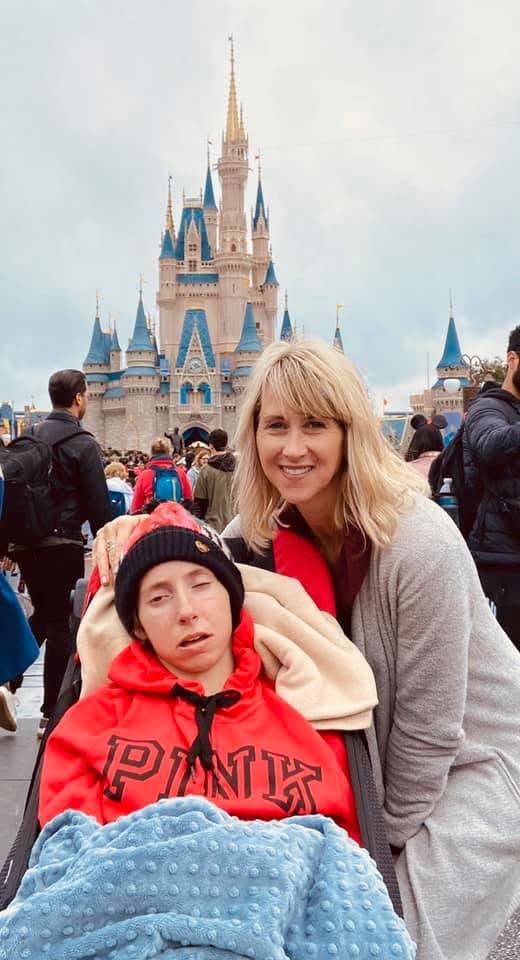



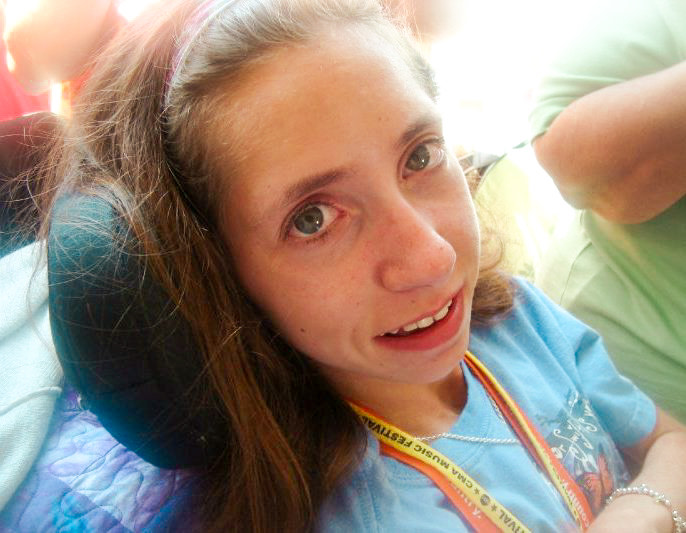
Chelsea Fabiszak wasn’t supposed to live past the age of nine. As young a child, she was diagnosed with Rett Syndrome, a severe neuro-developmental disorder causing regression in motor and language skills.
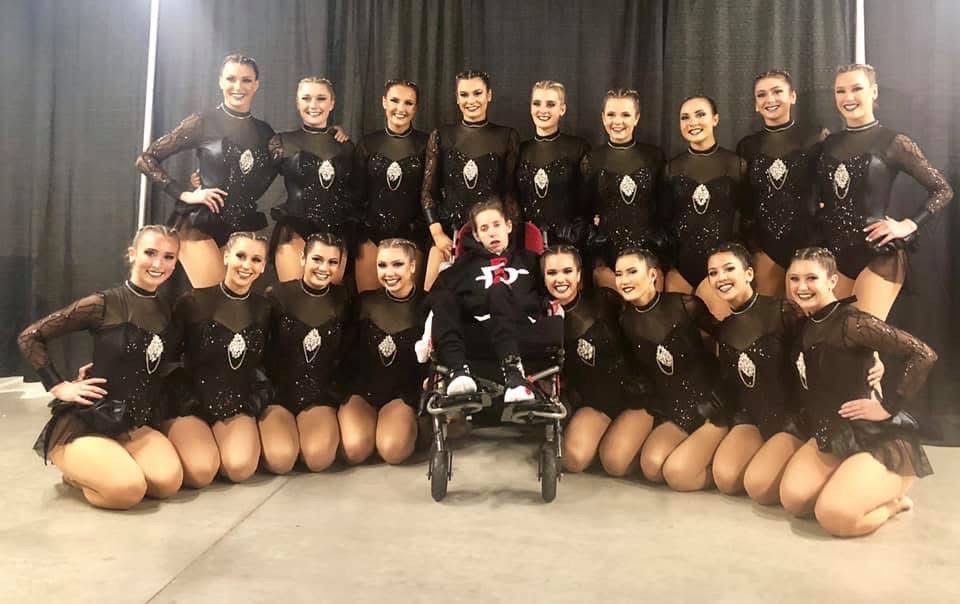
But with the help of her community, her medical team, and the advocacy of her family, Chelsea is now turning 34 years old. While she is bound to a wheelchair and cannot walk, talk or eat independently, Chelsea is a celebrated member of the community. She’s an honorary member of the San Diego State University Dance Team, an avid attender of country music shows, and, most of all, an inspiration to all with whom she comes in contact.
She’s also the inspiration behind Chelsea’s Voice, a local nonprofit dedicated to helping people and families with disabilities.
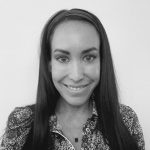
“Families are overwhelmed with therapies, appointments, education battles and medical issues,” said Veleria Pittman-Fabiszak, Chelsea’s mom and creator of Chelsea’s Voice. “Advocating becomes exhausting. We want Chelsea’s Voice to be a place where people can say, ‘I need help,’ and not feel alone.”
This spring, Chelsea’s Voice is relaunching with a festive, casual, family-friendly block party on March 22 to share its mission: supporting caregivers, connecting families with resources, and promoting inclusion for individuals with disabilities of all ages.
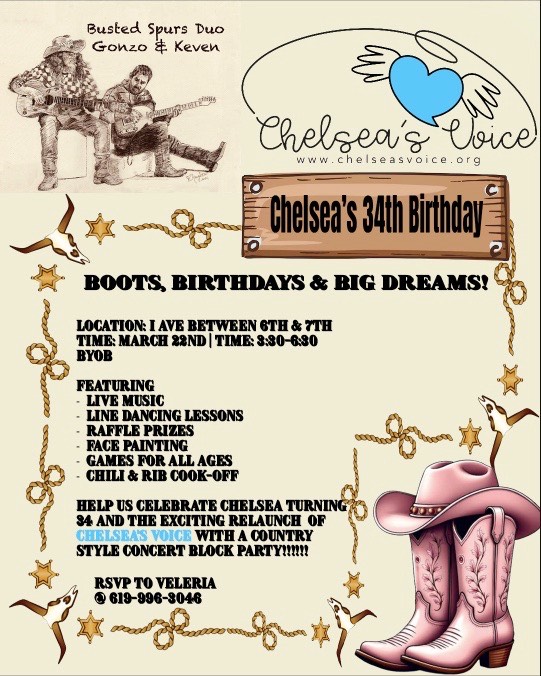 Guests will enjoy live music by Busted Spurs Duo (led by local musician Gonzo), face painting, line dancing, a chili and rib cook-off and more. Rather than a formal gala, Pittman-Fabiszak intentionally chose a casual neighborhood gathering to encourage participation.
“My philosophy is spend less, make more,” said Pittman-Fabiszak. “If you can have fun while doing it, even better.”
Not only will the nonprofit help families secure medical equipment or respite, but it could be something as simple as providing an emotional boost.
“We all need compassion,” she said. “And sometimes, it starts with just showing up for each other.”
Chelsea’s Voice originally began as a grassroots effort in 2018, with its first event earning more than $18,000. But momentum was halted when COVID hit, forcing the cancellation of its major fundraiser in March 2020. Pittman-Fabiszak said the nonprofit switched gears, coming up with other creative ways to help families.
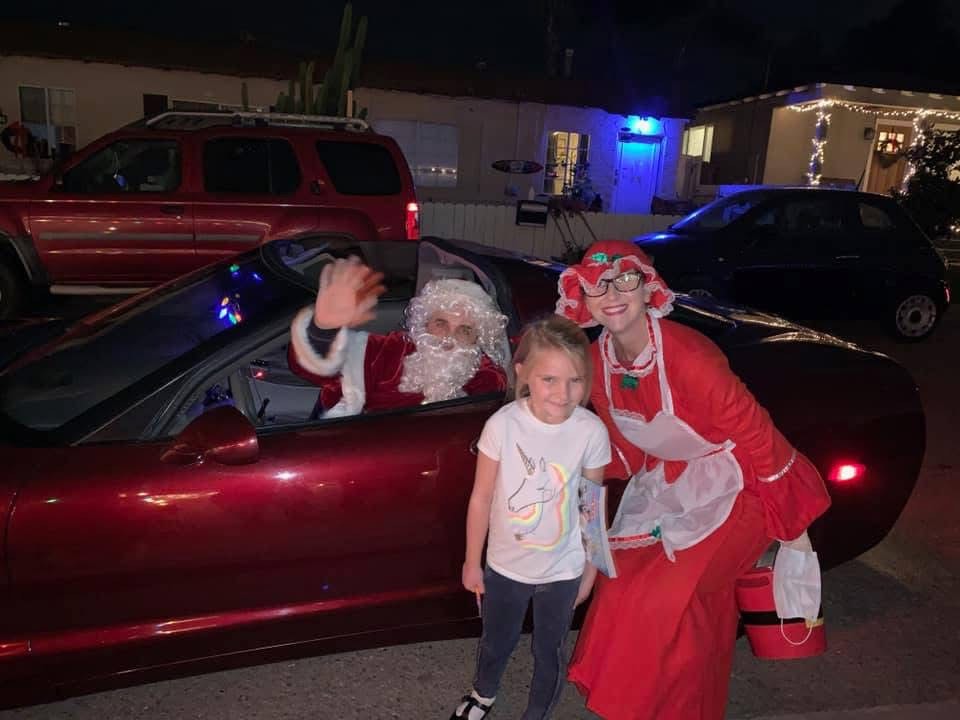
This included small fundraising efforts and holiday gift deliveries across San Diego County. Pittman-Fabiszak remembers dressing up as Mrs. Claus and visiting families isolating during the pandemic, offering socially-distanced encouragement and holiday cheer.
“That was really special,” said Pittman-Fabiszak. “Parents weren’t expecting anyone to show up for them.”
But in the years since, the nonprofit took a back seat to Chelsea’s personal health struggles: she faced numerous challenges and endured long stays in the intensive care unit. Pittman-Fabiszak also navigated a divorce. But she made a promise to relaunch Chelsea’s Voice as soon as she could.
“While being in the hospital, I knew I needed to make [Chelsea’s Voice] something,” said Pittman-Fabiszak. “Chelsea is going through these things for a reason. Her story is not done.”
Pittman-Fabiszak says that life can be very isolating for those with disabilities and their caregivers.
But social connection plays a critical role in health outcomes for people with disabilities. She’s seen first-hand how Chelsea’s physical and emotional well-being improves after attending events, watching concerts or being a part of community gatherings.
“When she’s around people and stimulation, she’s more alert, she’s smiling, she’s more engaged,” she said. “When that’s taken away, she regresses. Humans are meant to be around other humans.”
Without social connection, said Fabiszak, the disability takes over.
That’s one of the reasons why she’s spearheading the development of an accessible playground at Spreckels Park.
“It’s important to have the community open and accessible, so those with disabilities are visible in the community,” said Pittman-Fabiszak. “It’s not a playground for those with disabilities. Its a playground for everyone.”
She said previous efforts to create accessible parks in Coronado missed the mark. She’s in contact with city leaders to renew efforts to expand recreation options in Coronado, including efforts to improve playground accessibility so children of all abilities can play together.
Pittman-Fabiszak says that it’s not about making the community better and more inclusive for those with disabilities; it’s about making it better for everyone.
“I never wanted Chelsea to impede anyone else’s experience,” she said.
In fact, she says, time spent with Chelsea or others with disabilities could actually benefit the entire community.
“If you spend time with Chelsea, she makes you better at whatever you do,” she said. “It might take a little bit of effort, a little bit more work, but the reward is far beyond that.”
She says Chelsea has inspired kids to go to college and embark on professional journeys they wouldn’t have imagined without knowing her. Mothers who have grown up with Chelsea have called Pittman-Fabiszak and thanked her for putting Chelsea in Girl Scouts, sharing that their time together informed them about experiences they have with their own children, some of whom have disabilities.
For Pittman-Fabiszak, it’s all about exposure — creating a community where those with disabilities are included and visible to everyone else, and vice versa. Hopefully, with a little education, the community can come out stronger.
“When people hear the real story — the hardships and the victories — they connect,” she said. “This isn’t just about one family. This is about building a community where no one feels isolated.”
Chelsea’s Voice is seeking board members, volunteers, and student involvement, particularly local teens who might want to contribute skills such as video production, website development, or event support. To connect with Chelsea’s Voice, contact Veleria Pittman-Fabiszak at 619-996-3046.