



 The Coronado Unified School District is again on track to become a locally-funded Basic Aid District by the 2027-2028 school year, thanks to a new $3.1 million lease-purchase agreement approved by the board last month. The agreement, which is essentially a loan, will enable the district to meet the required 3% reserves required by the San Diego County Office of Education.
While the district projected ending the 2024-2025 fiscal year with $11.2 million in available reserves, they ended up with $14.4 million. That’s $3.2 million higher than projected.
Deputy District Superintendent Donnie Salamanca pointed to two main factors that positively impacted the district’s financial position: the capital outlay of funds related to the lease purchase agreement, as well as higher-than-expected insurance reimbursements for the 2024 floods.
“We’re not out of the woods, but we’re confident that given the information we have today, we will be able to demonstrate sufficient budget solutions by the first interim budget,” said Salamanca at the September 11 school board meeting.
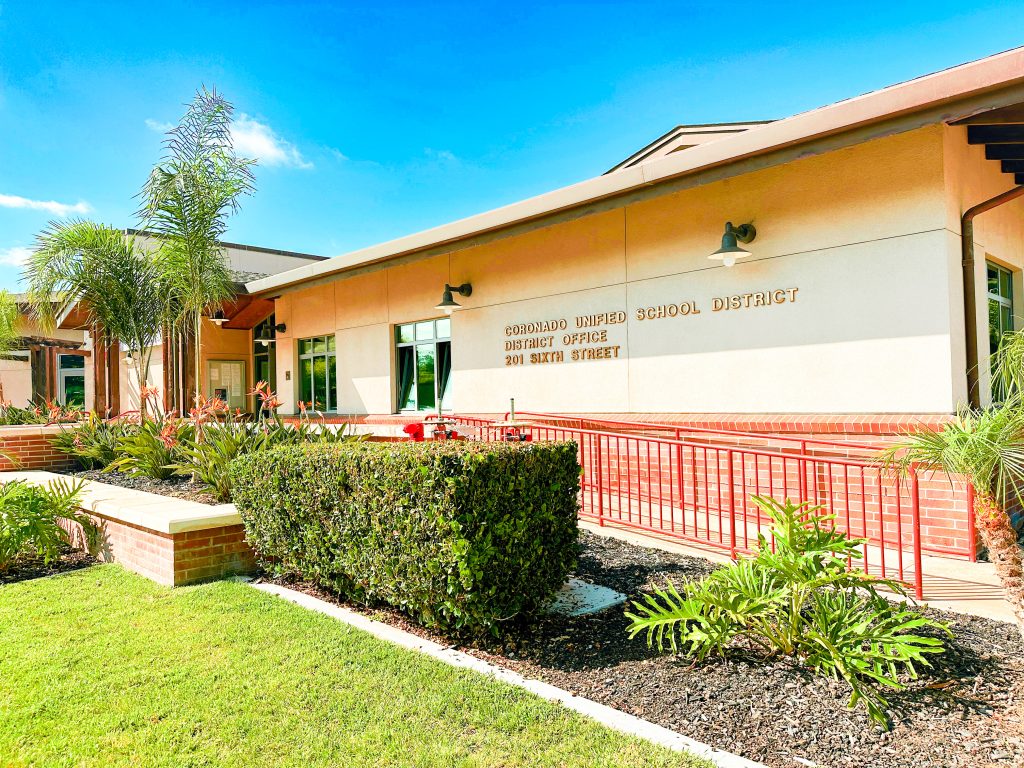
The loan, according to Superintendent Karl Mueller, will be against the district properties located at Palm Academy at 555 D Avenue and the district offices located at 201 Sixth Street.
While the budget is looking up, Salamanca said that unanticipated factors such as declining enrollment or negotiated salary increases could necessitate further budget expenditure reductions.
CUSD isn’t the only school district in the county to seek financing, or, as Salamanca called it, “put it on a credit card.” Last month Poway Unified voted to partially finance a new $28 million heating and air conditioning system for Rancho Bernardo High School and Bernardo Heights Middle School, according to an article in the San Diego Union Tribune.
Special education
Special Education was another big focus of the meeting. Niamh Foley, the CUSD Director of Special Services, gave a high level report of the district’s special education program which serves 463 students as of June 2025.
Special education students must meet requirements in one or more of 13 conditions in order to qualify for services. The most common conditions are specific learning disability, other health impairment, autism, or speech language impaired.
There are 12 different job titles that support the special education department, ranging from speech language pathologists to school psychologists to instructional assistants.
The district spends more than $10 million in the special education department, with 80% of that going to certificated and classified salaries and benefits. 20% is used for services and operating costs.
According to Foley, the department is focused on continuing to grow the district’s registered behavior technician (RBT) program. In addition, the district is expanding the offering of its alternative pathway to diploma program, which enables students with significant disabilities to demonstrate their understanding of high school classes and receive a diploma.
In his superintendent report, Mueller shared that all classified and certificated staff will participate in a one-hour suicide prevention training led by Dr. Margaret Sedor. Key components of the training include recognizing warning signs of suicidal ideation, understanding appropriate intervention strategies, identifying mental health services and accessing support services.
The next regularly scheduled board meeting takes place on Thursday, October 16 at 4 pm at the district offices. There is a special meeting of the board on Friday, September 26 at 8:30 am.