




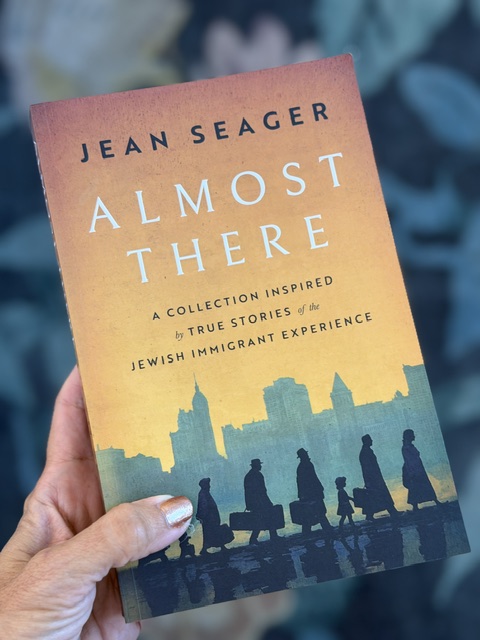
Almost There, a book 15 years in the making, is a collection of stories inspired by the real-life experiences of Jewish immigrants and their descendants. For award-winning author Jean Seager, the heart of these stories lies in the striving — the determination to keep going, even when the odds seem insurmountable.
The result is a collection of fictionalized stories that Seager hopes come “very close” to the truth.
“You can learn about immigration and the history of America…you can learn how many people came, how many ships, where they came from,” said Seager. “But I feel like you don’t really understand it until somebody tells you a story about it. Then you can empathize with the characters and maybe feel what it feels like to be in that situation.”
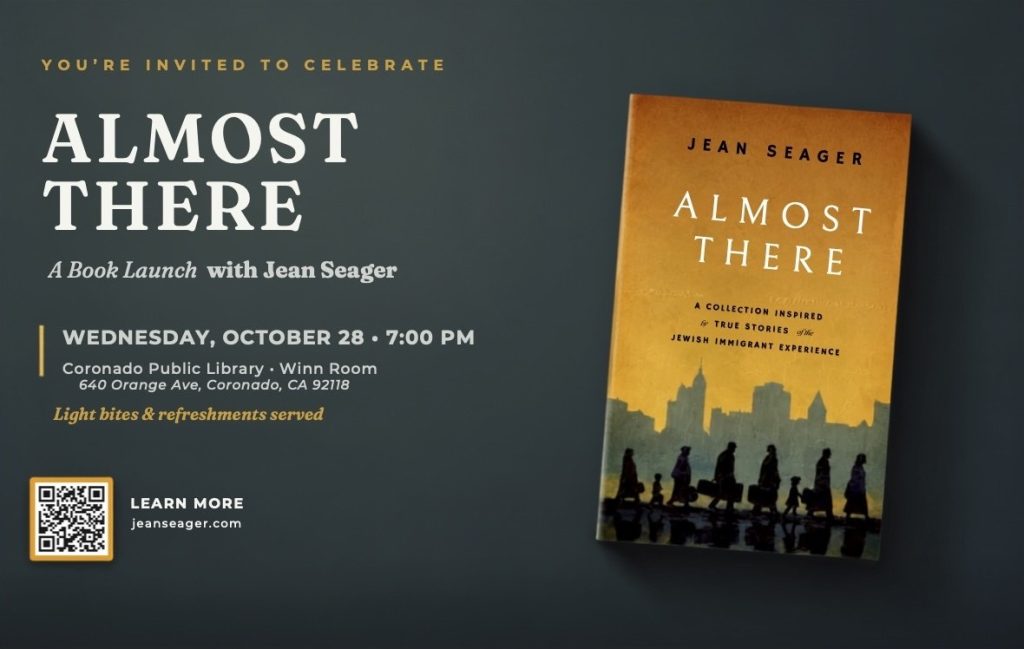
Seager will celebrate the release of Almost There with a book launch at the Winn Room at the Coronado Public Library on Wednesday, October 28, at 7 p.m. Books will be sold at the launch, and are also available on Amazon.
 A longtime Coronado resident, Seager has penned award-winning short stories and garnered prizes for her original plays. But Almost There was something different.
The idea first took shape during gatherings of a women’s group that met once a month. Over time, the women began sharing stories about their childhoods and their experiences as children and grandchildren of Jewish immigrants.
“One woman said she came from one of the only Jewish families in North or South Dakota,” said Seager. “She said it was really, really hard on everyone. Then other people started talking about their childhoods and what it was like being Jewish in different environments.”
And the idea grew from there.
Seager began reaching out to people she knew through the Mandelbaum Family Lecture Series, organized by the San Diego Center for Jewish Culture. She started collecting stories and conducting interviews, eventually speaking with about 15 to 20 people.
Although the stories in her book are fictionalized, each was inspired by real-life experiences.
One story grew out of a friend’s childhood memories of listening to baseball games in his Detroit basement.
“This friend of ours would talk about how as a kid growing up in Detroit, he would listen to the baseball games in his basement,” said Seager. “He loved Hank Greenberg because he was a Jewish baseball player.”
That memory became the inspiration for “Hero,” one of the stories in her collection.
Another story draws from the experience of a young woman living in Russia whose father arranged her marriage to a man preparing to leave for America. The plan was for him to establish himself in his new country and send for his bride.
But things didn’t go as planned.
“She’d only spent one night with this man before he left, it was crazy,” said Seager. “He didn’t send for her, and he didn’t send for her. And finally his Aunt said, you know, you made a promise. We’re putting money aside and we are sending for her.”
Eventually, the family arranged for the young woman to make the daunting journey to Cincinnati, alone, to reunite with a husband she had known for just one night.
The stories aren’t necessarily joyful, although hopeful moments — on occasion — shine through. But Seager doesn’t go out of her way to sugarcoat the struggles of assimilation.
“When everything comes out okay and everybody’s happy, that doesn’t really speak to me as a person,” she said.
These are important stories, said Seager, because it’s not just about the journey to America: it’s about struggling to fit in and make a new life.
“This is important to every group, not just these Jewish immigrants, but immigrants to any country in the world,” she said. “There is always that kind of push and pull, of how much you want to assimilate, and how much you want to retain your Old World values.”
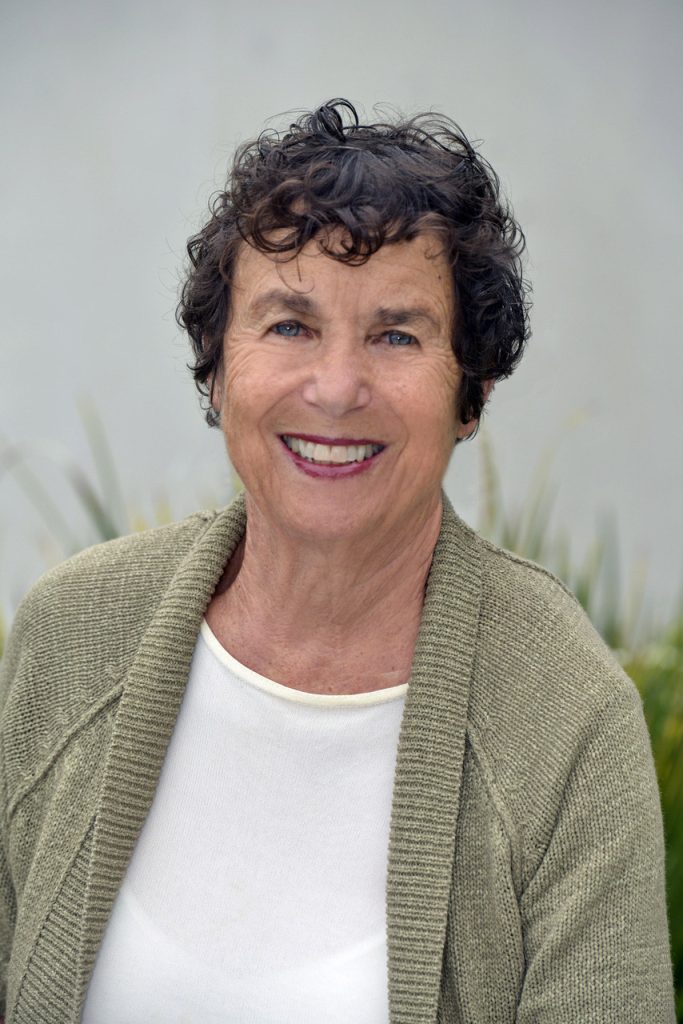
And for Seager, the struggle is personal.
“I would think of my grandparents, four who came to this country as first-generation immigrants,” said Seager.
While writing the book, she pulled out an old photograph of her grandmother, taken when she was in her late teens or early 20s. Her grandmother had traveled to the United States from Russia, completely alone.
“She came from Russia all the way to the coast of Europe to Turkey, got on a ship, and came to America as a young woman,” said Seager. “My mom told me stories about her. Her sister was living in Tennessee, so that’s where she went.”
Her father’s family came from Romania, but he was reluctant to talk about his past.
“He said, ‘I never want to go back there,’” said Seager. “He said, ‘I’m here, and I don’t even want to think about what happened back there.’ He was vehement about moving forward instead of looking back.”
She said that several of the people she interviewed from Eastern Europe shared this outlook. Part of the reason, she thinks, is because they knew they would never return.
“They knew they were never going back. They just knew it. This was like their new life,” said Seager. “That’s a whole different perspective of how you and I have the means to maybe make a trip back.”
She said it makes her appreciate what her family went through to get here. She ended up dedicating the book to her grandparents.
“It makes me appreciate what I have,” said Seager. “Because if they hadn’t come here, they’d be dead.”
Their tenacity inspired her fervor to finish the book, even when things got tough.
“It took me six or seven months to do all the interviews,” she said. “And about ten years to write it.”
She said the hardest part was just “keeping at it.”
To stay motivated, she joined a writers’ critique group, where authors shared their work and offered feedback. Knowing she needed to bring something new to each meeting helped keep her writing.
Then, she couldn’t find a publisher.
“I had an agent who submitted it all over the place for about a year and a half,” said Seager. “So I put it away for many years.”
Then she decided the book couldn’t just live in her computer. It needed to see the light of day.
She ended up using a “hybrid publisher,” which combines elements of traditional publishing with self-publishing independence, charging authors an upfront fee.
Seager is very happy that Almost There is finally here. Like the title, the book acknowledges the beauty and joy of moving forward when things are hard.
“I picked the title because that’s where everyone is,” said Seager. “No matter who you are, you’re almost there. You’re almost kind enough, you’re almost involved enough, you’re almost everything enough…but you never really quite get there. But we are striving.”