




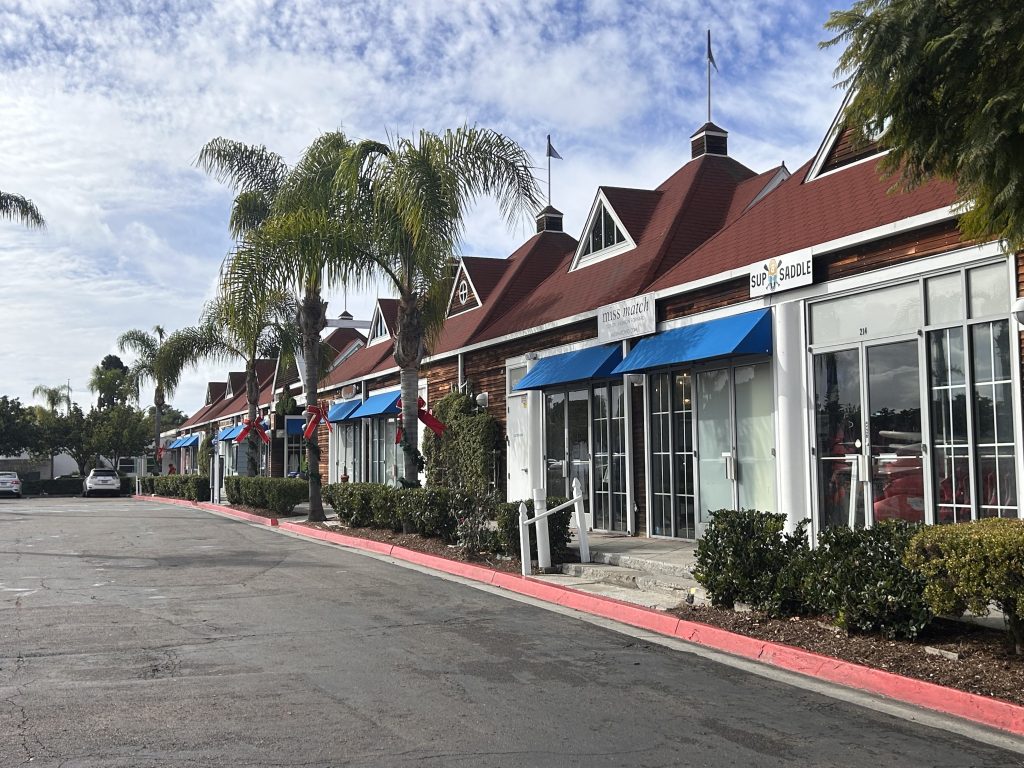
The San Diego Board of Port Commissioners voted unanimously Tuesday to approve an option-to-lease agreement with Port Coronado Associates (PCA) for the Coronado Ferry Landing, resolving a months-long standoff between the port and the longtime operator of the bayfront retail center.
The vote, which came just one week before PCA’s 40-year lease was set to expire June 30, gives the company 12 months to satisfy a list of preconditions before executing a new 35-year lease — one that moves construction up a full year to 2027, cuts the building timeline from 36 months to 24, and folds in structural and utility work on the ferry pier that wasn’t part of the original scope.
For Commissioner Frank Urtasun, who represents Coronado on the board and spent months pressing for a resolution, the outcome was both a relief and a point of pride.
“This has probably been my most difficult deal,” he said, “and I’m quite proud of it.”
Urtasun said his central concern throughout was timing — specifically, that a drawn-out process or a change in operators would leave Coronado residents waiting years longer for a remodeled center.
“My concern was that I didn’t want the residents of Coronado to have to wait another three years to see a new, remodeled shopping center there,” he said, adding that prolonged uncertainty would leave Ferry Landing subtenants in limbo.
Under the structure approved Tuesday, PCA’s current lease remains in effect during the 12-month option period, provided PCA meets its obligations. To execute the 35-year amended and restated lease, PCA must satisfy eight time-bound preconditions, including commencing early work (demolition, parking improvements, and landscape upgrades) within six months; submitting full working drawings within nine months; securing equity commitments within 10 months; locking in full project financing within 11 months; and delivering permits, performance bonds, and an executed construction contract in the final month before expiration.
The total anticipated project cost is $21.9 million, with PCA also required to contribute no less than $5.3 million toward subtenant improvements. The 35-year lease is projected to generate approximately $18.5 million in net present value for the district.
If PCA fails to meet the preconditions, the company is required to perform transition services to return the site to the district in good order at no cost.
The new lease includes personal guarantees from PCA ownership and a series of contractual guardrails: periodic condition assessments, required maintenance spending, and monetary and legal remedies tied to specific project milestones.
Christian Herrera, vice president of development and operations for Port Coronado Associates, said the company is grateful for the board’s approval and the collaboration that produced it.
“Our commitment is to create a vibrant, welcoming and world-class experience that reflects the unique character of Coronado while serving residents and visitors alike,” Herrera said in a statement. “We are excited to build on the Ferry Landing’s legacy and ensure it remains a place the people of Coronado can take pride in for generations to come.”
The path to Tuesday’s vote was not straightforward. The dispute dates to October 2025, when the Port announced it would not renew PCA’s existing lease and intended to take over operations of the Ferry Landing.
By November, Port staff were pointing to roughly $17.5 million in deferred maintenance as justification, though PCA said these concerns had never been disclosed. By December, the Board had reversed course again, voting unanimously to send the matter back to closed-session negotiations after PCA submitted a revised proposal addressing those maintenance concerns.
Since December, PCA has resolved approximately 95 deferred maintenance items to the district’s satisfaction.
Urtasun acknowledged the process was difficult on all sides. He said he understood both the Port’s position — the capital requirements of self-operating the Ferry Landing, the risk, the condition of the property — and PCA’s frustration. He did feel, however, that PCA should have been notified of the deferred maintenance concerns earlier rather than at the end of the lease term. “To their credit,” he added, “once they were notified, they took care of it.”
The vote was preceded by a round of mutual appreciation — and a few pointed remarks about how the process unfolded.
Urtasun credited the commission’s persistence for the deal’s improved terms, pointing specifically to the inclusion of the ferry pier, the new activation consultant, and new local leasing representatives.
“This center should have never gotten to the condition that it did,” Urtasun said during the board meeting. “The fact of the matter is, we’re going in the right direction, and this is the quickest solution to get there.”
Commissioner Michael Zucchet, who seconded the motion, was more direct about the rougher stretches of the negotiation. Though he criticized PCA’s decision to go public with its grievances, including what he characterized as name-calling directed at port staff, he credited Urtasun for navigating the most difficult parts of the process back to resolution.
“Everybody in this room, and every caller on the phone (speaking during public comment in support of the deal), owes a debt of gratitude to Commissioner Frank Urtasun,” Zucchet said.
Commissioner Dan Malcolm, who was praised by his colleagues for pushing for more accountability at the Ferry Landing, offered a defense of the board’s approach.
“We sit up here representing the state of California as fiduciaries and trustees,” he said. “We had a developer that was negligent in their upkeep of the property, so it was right for us to point that out.”
He said the deal as approved is “demonstrably, measurably better” than what was on the table when negotiations began.
Commissioner Ann Moore, chairing the meeting, wrapped up the board discussion by crediting both Urtasun and Port staff.
“We would not be here today if it wasn’t for you driving this project forward,” she told Urtasun. “Sometimes, doing that doesn’t make you popular, but you did it anyway, for the community and for your city.”
Coronado Mayor John Duncan, who appeared in person to urge approval, said his goal throughout had never been to hand PCA a blank check, but to ensure the port and the operator could reach terms that produced the best, most timely project.
Duncan was initially critical of the Port’s decision to handle its real estate negotiations in closed session, but said he was pleased with the outcome of negotiations.
“This is a better, better project,” he said. “It’s faster, more money is being invested, and there’s more accountability.”
Several Ferry Landing tenants called in to express relief at the resolution. As negotiations played out, many business owners said the uncertain future of the Ferry Landing — and their leases in the space — made it difficult for them to run their businesses or plan for the future.
Urtasun said he is confident the hard work will show.
“I’m confident that Port Coronado Associates knows what our expectations are,” he said. “We’re going to get a new, remodeled, top-of-the-line shopping center there — and done more quickly than any other avenue. This is a good thing for everyone involved, and I’m happy to see how we’ve come together for this outcome.”