




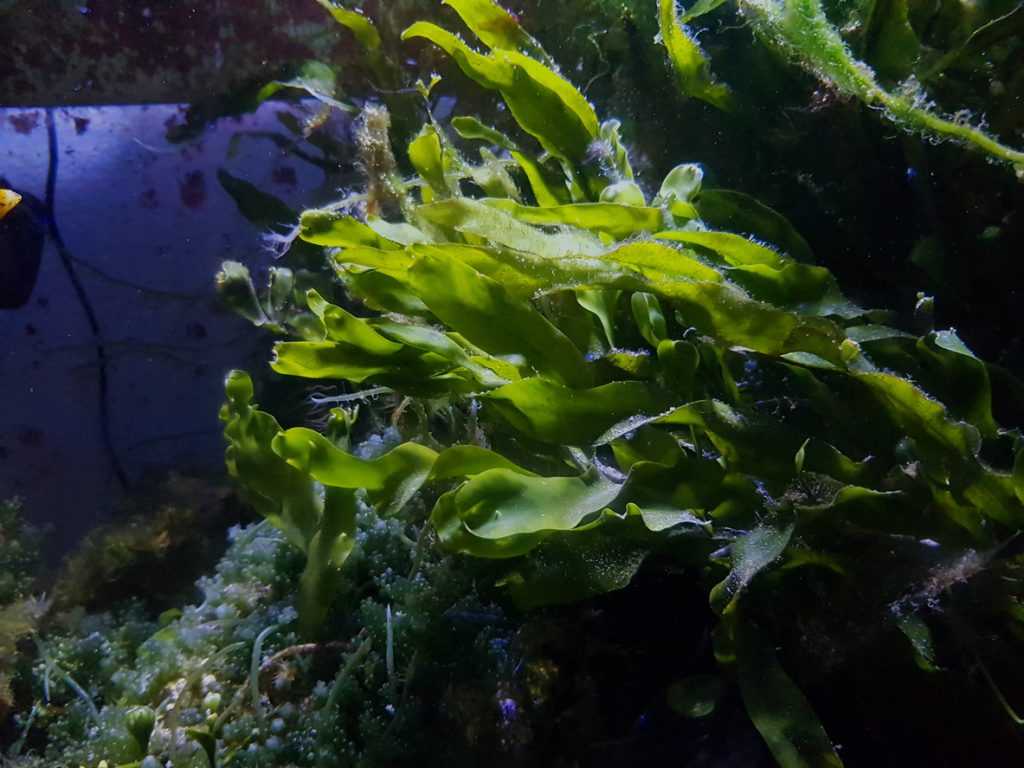
More money is on the way to help address a highly invasive tropical alga that was first discovered in the Coronado Cays in September 2023.
A $200,000 grant will fund diver surveys and eradication efforts for Caulerpa prolifera, a fast-growing alga that chokes native seaweed and eelgrass and threatens native marine habitats. The grant was allocated by the Pacific States Marine Fisheries Commission to the Port of San Diego.
The San Diego Board of Port Commissioners declared an emergency after the discovery of Caulerpa in 2023, and has continued it 18 times, with the most recent emergency declaration expiring on March 15. Coronado has also declared a local emergency in the matter.
The alga spreads by tidal movement, vessel traffic, and fishing activity. It is not harmful to humans.
Eelgrass provides food and shelter for more than 70 types of fish and more than 100 endangered green sea turtles. Nearly 2,6000 acres of eelgrass exist in the San Diego Bay, and it serves as the base for the local food chain and improves water quality.
Caulerpa was first discovered during a routine dive survey tied to a dock replacement project in the Coronado Cays. Later follow-up surveys found additional patches of the alga in and around the Cays. In April and August of 2025, divers found small patches near the San Diego Bay National Wildlife Refuge.
To date, approximately 11,300 square feet of Caulerpa have been identified in San Diego Bay of which more than 300 square feet is within the Port’s jurisdiction. Trained divers have covered all known patches with sealed benthic barriers, which kill the alga by cutting off light, oxygen and water circulation. This method has been successfully used in other Southern California eradication efforts.
The Port is working with the Southern California Caulerpa Action Team, a coalition of state and federal agencies coordinating a rapid response to prevent further spread. As part of the eradication process, two years of monitoring with no new discoveries are required before the alga can be declared fully eradicated.
The South San Diego Bay spans about 3,000 acres. So far, $3.1 million has been committed to surveys and eradication, including $1,192,000 from Port funds, $600,000 from state funds, and over $1 million awarded to the San Diego Bay National Wildlife Refuge Complex from the Bipartisan Infrastructure Law, Inflation Reduction Act.
Similar infestations have been discovered and are being addressed in Newport Bay. Other Caulpera species were successfully eradicated from Huntington Harbor and the Agua Hedionda Lagoon in the early 2000s using the same benthic barrier treatments that are being used in the San Diego Bay.
The most likely source of the infestation is the release of aquarium contents into the bay. Because of the environmental risk, it is illegal in California to possess, sell or transport any Caulerpa species. Violations can result in fines ranging from $500 to $10,000 per incident.
If you have or sell saltwater aquariums, do not dump any aquarium species into California waters or pour aquarium contents down storm drains or into sewage systems. Before dumping aquarium water into a household drain that leads to a treated sewage system, bleach the water using 1/3 cup of bleach per gallon of water for 10 minutes.
Do not purchase, share, or sell Caulerpa or use it in your aquarium, and freeze any suspected Caulerpa for at least 48 hours before dumping it in the garbage.
Boaters, kayakers, swimmers and divers are also asked to avoid infested areas when possible and to gently pass through at high tide if avoidance is not feasible. Anyone who spots suspected Caulerpa is encouraged to report it to the California Department of Fish and Wildlife at wildlife.ca.gov/Conservation/