




While walking around Coronado, you may notice homes that have a small circular plaque designating them as historic landmarks. If you are interested in architecture, landscape architecture and history then explore the Coronado Designated Historic Resource Register. This list gives the address, the architectural style, architect and famous people associated with the property. Architects on the list include Irving Gill, William Templeton Johnson, and Richard Requa. Architectural styles include Tudor, Craftsman Bungalow, Spanish Colonial Revival, Eclectic and many more. Coronado even has two properties with landscapes designed by the famous California horticulturist Kate Sessions.
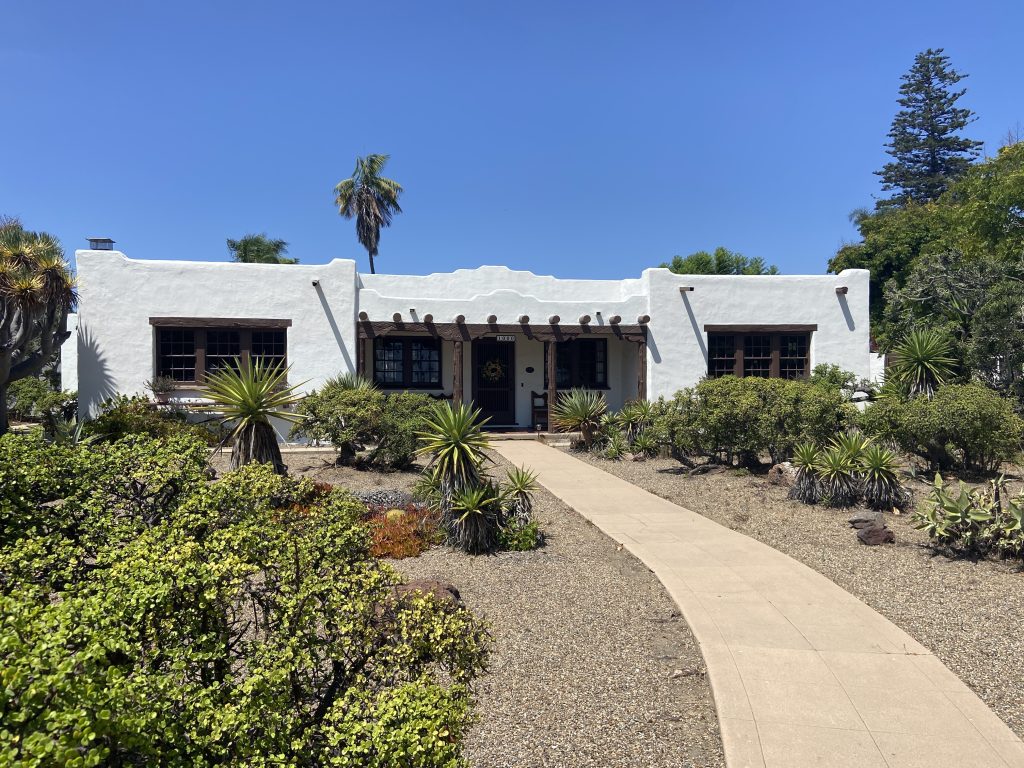
People chose to have their homes designated as a qualified historical property in hopes that it will be preserved for future generations and also to qualify for tax breaks under the Mills Act.
The Mills Act, passed in 1972, was sponsored by State Senator James R. Mills, who represented San Diego County. The Mills Act is credited with saving thousands of historic buildings from destruction. The California Office of Historic Preservation calls the Mills Act “the single most important economic incentive program in California for the restoration and preservation of qualified historic buildings by private property owners.”
The Mills Act is administered and implemented by local governments. Each local government establishes their own criteria and determines how many contracts they will allow in their jurisdiction. Mills Act contracts are between the property owner and the local government and the contract stays with the property when it is transferred.
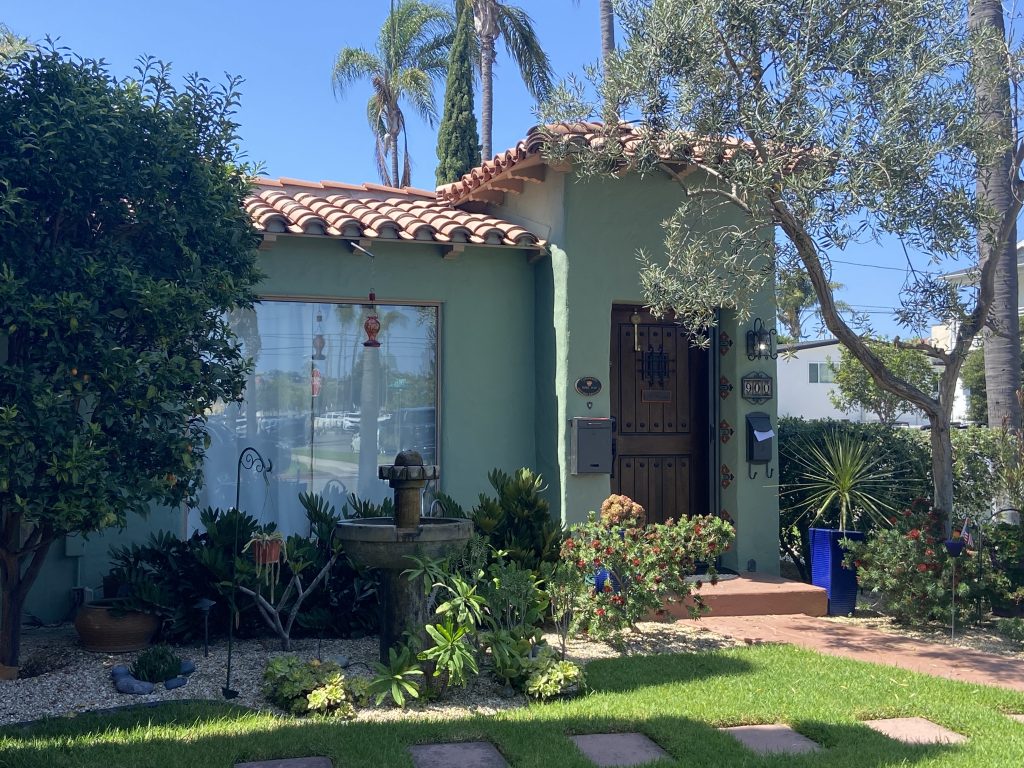
This article dispels some of the myths associated with historic preservation.
Myth: Any old home can receive historic designation
The City of Coronado Municipal Code Chapter 84.10 identifies the criteria by which a resource may be designated a historical resource. The Historic Preservation Guidebook goes into greater detail for each of these criteria.
- A building, structure, object or site may be designated by the Historic Resource Commission if it is at least 75 years old, or has achieved historic significance within the past 75 years and meets two or more of the following designation criteria:
- It exemplifies or reflects special elements of the City’s military, cultural, social, economic, political, aesthetic, or engineering history
- It is identified with a person(s) or an event(s) significant in local, state or national history
- It possesses distinctive characteristics of an architectural style, and has not been substantially altered
- It is representative of the notable work of a builder, designer, architect, artisan or landscape professional.
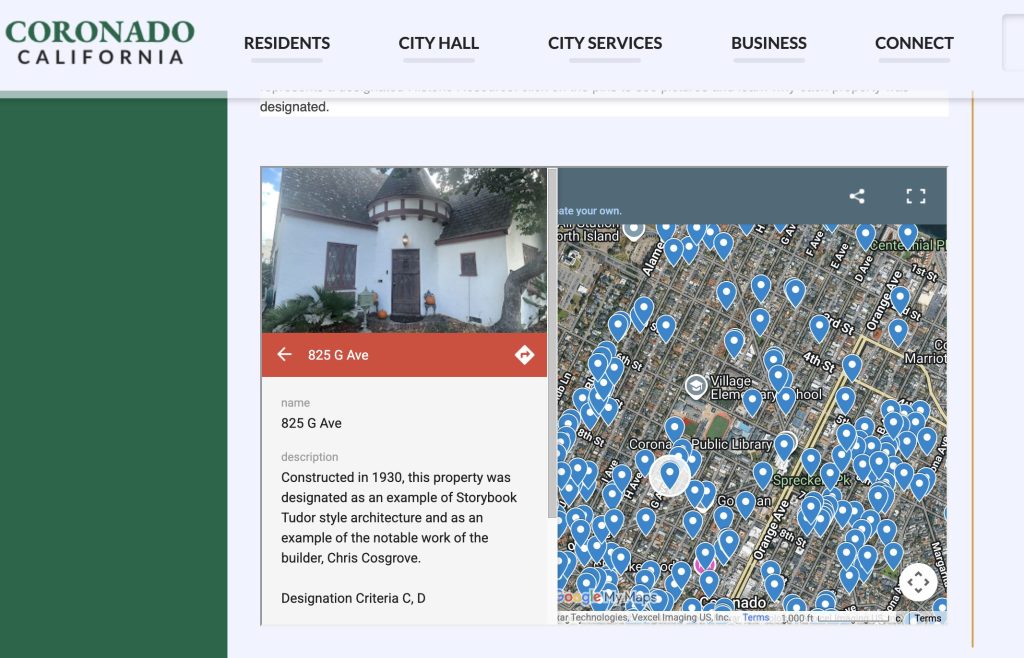
- Coronado Historic Preservation website has resources available regarding historic properties, including an interactive map.
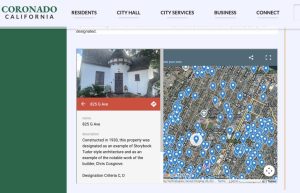
The interactive map on the Coronado City Website lets you explore historically designated homes. Myth: You can’t make any alterations to a designated historic property
Historic preservation focuses on the exterior and the program does not regulate the interior, (unless proposed interior modifications impact the exterior). Modifications, additions and improvements to the exterior can be made, but must first be approved by the Historic Resource Commission. The emphasis is on preserving the public-facing facade.
Myth: There are no owner advantages to having a historic property designation
The property tax savings from the Mills Act can be significant. According to Jim Newland, historian of La Mesa History Center, properties that qualify under the Mills Act typically save 60 percent on property taxes. County assessors note reductions range roughly 20 to 70 percent, depending on the property. This is to compensate the owner for the additional costs associated with the upkeep of an older home. There are also costs associated with making repairs and restorations to the facade of a historic home. These repairs and restorations can be expensive because of the level of craftsmanship of period homes, as well as the extensive use of wood which weathers.
Additional benefits include exceptions to some zoning standards, use of the California State Historic Building Code and the reduction of some permitting fees. Another economic perk is that designated historical buildings tend to maintain or increase their property value.
Myth: You can’t build an ADU on a historic property
Accessory Dwelling Unit (ADU) construction is possible if the new building does not impact the public-facing facade or is a visual distraction to the historic structure. In addition, the Housing Element Update of Coronado Municipal Code Chapter 86.56.105 permits the conversion of existing carriage house structures into ADUs through the installation of kitchens and bathrooms. These conversions must still comply with all other carriage house standards.
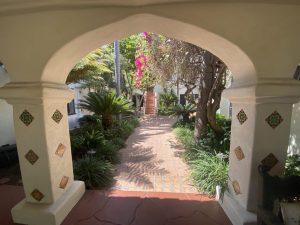
The courtyard landscape at the Monterey Apartments on D Ave was designed by Kate Sessions. Myth: Determination of Historic Significance review is required for the sale of a property
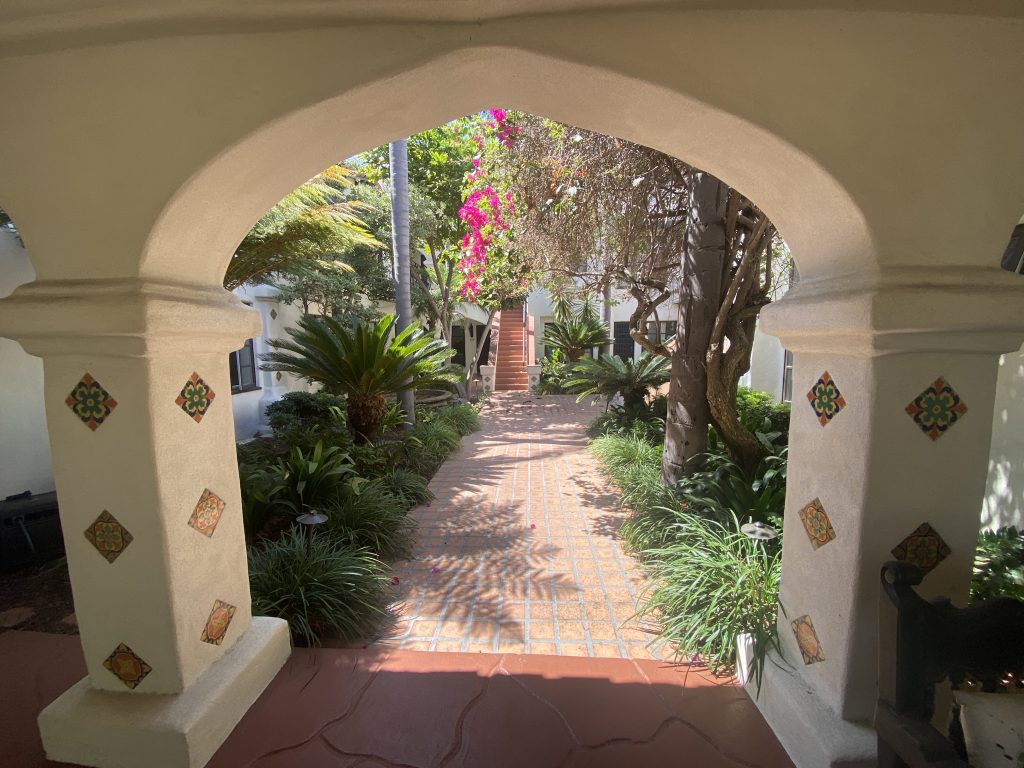
The City does not require any Determination of Historic Significance review in association with real estate transactions. The City’s Historic Preservation Program Guidebook provides information on that review and when it is required.
Fact: Mills Act Contract Terms
- The contract runs for a minimum term of 10 years and is renewed annually for the minimum term.
- The contract runs with the land and is recorded onto the title. It is transferred to new owners when a property is sold.
- Property must be maintained in accordance with the Secretary of the Interior Standards or Treatment of Historic Properties. Building permits get both code and Historic Reviews.
- Property may be periodically inspected to ensure compliance.
Interested in Determining if your Property Qualifies Under the Mills Act?
- The city maintains a list of Properties Determined to be Non Historic. If your property is on this list, then you don’t qualify.
- Read through the Coronado Designation Criteria Guidelines which provide a detailed explanation of the criteria.
- If you feel that your property qualifies and want to go further, the application for the Mills Act and many other resources are available at www.coronado.ca.us/preservation
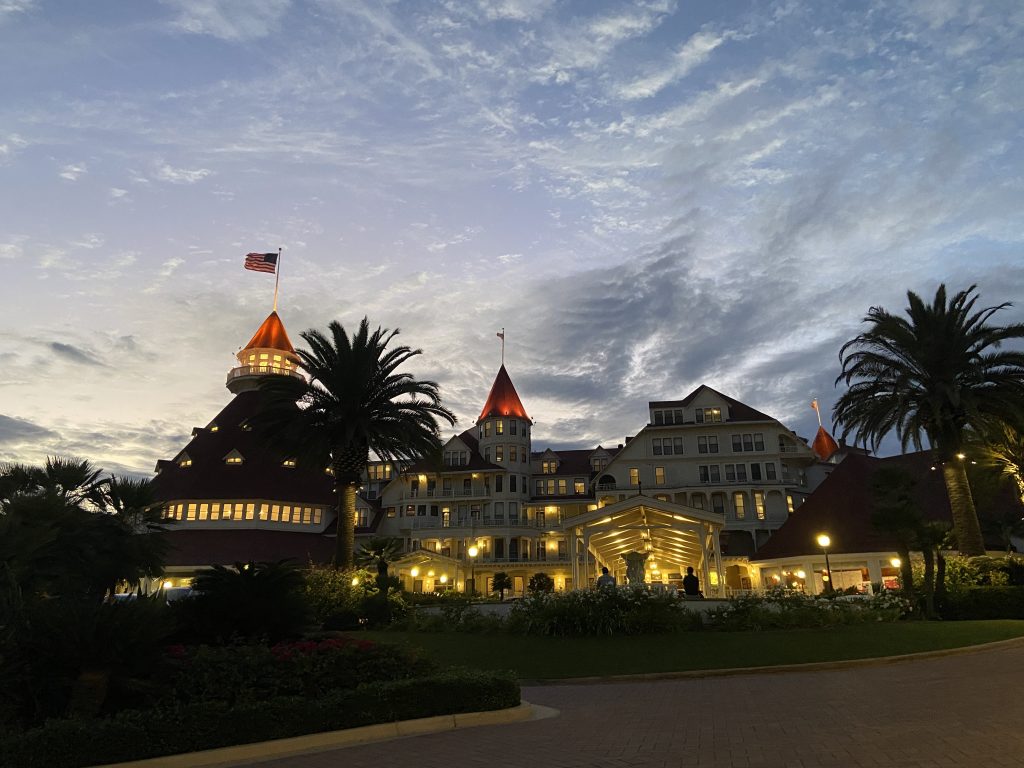
Coronado has a wealth of historical homes, apartment bungalows and commercial buildings. The Mills Acts is a significant reason why they have been preserved for us and future generations.