



On October 1, the second annual San Diego Climate Week (SDCW) held its opening ceremonies in Coronado. The event kicks off a week with over 100 events occurring throughout San Diego County. Activities focus on building a more climate-resilient and inclusive region, and range from job fairs and summits to farm tours and invasive plant removals. As part of SDCW, a community cleanup will be held in Coronado at Tidelands Park on Saturday, Oct. 3 at 8 a.m., in partnership with Emerald Keepers.
Paddle out for clean water
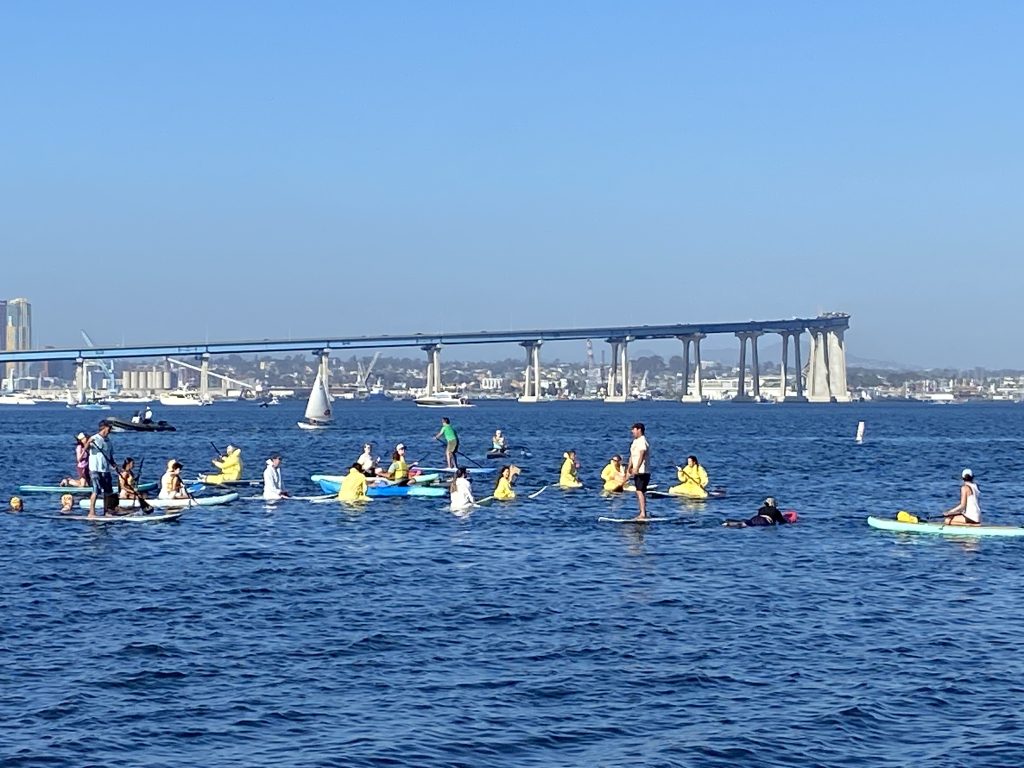
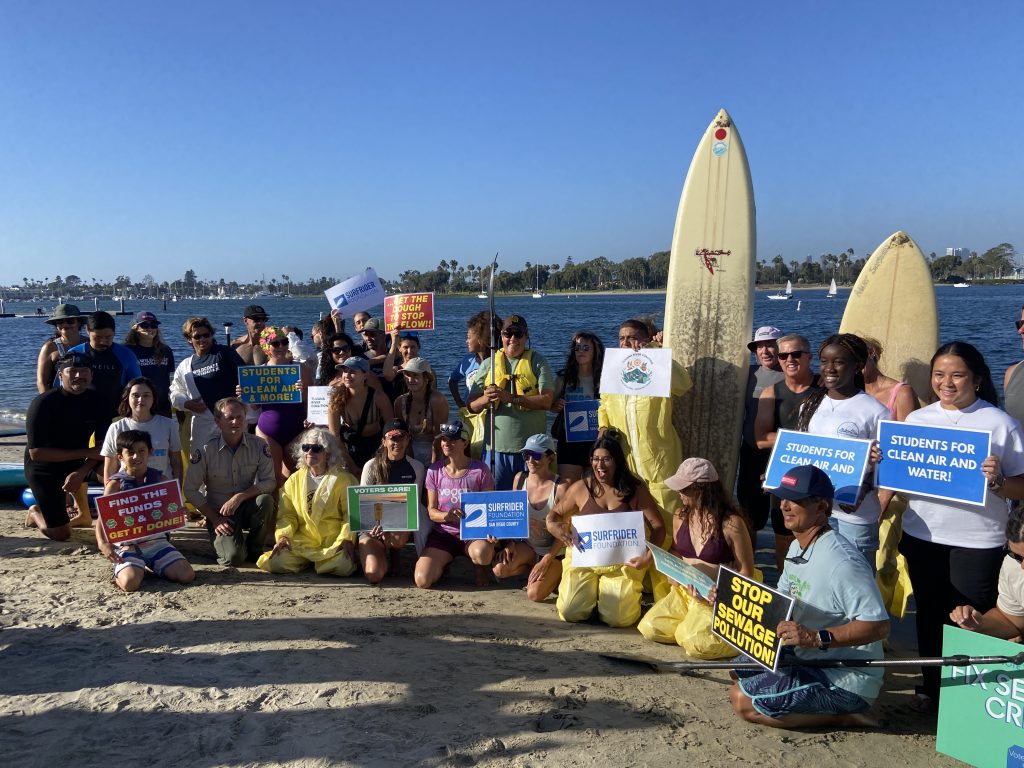
The opening ceremony of San Diego Climate Week began with a paddle out in Glorietta Bay at 4 p.m. on Oct. 1. Approximately 65 paddle boarders, swimmers, kayakers, and surfers — many wearing hazmat suits — formed a circle in the bay.
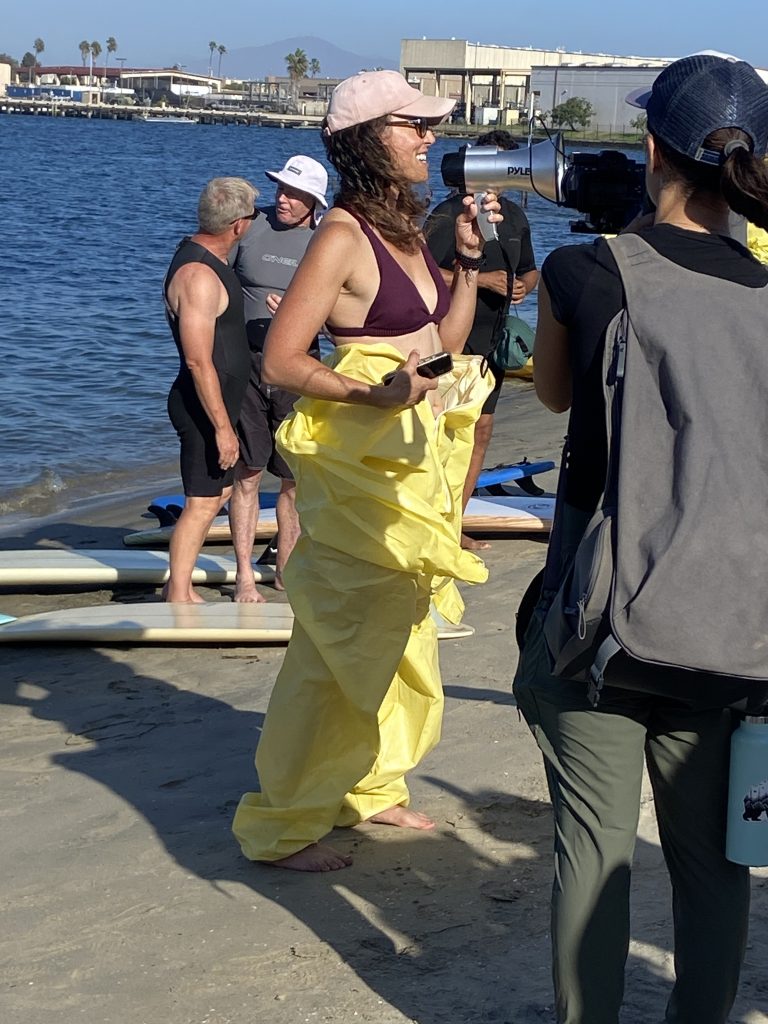
The yellow and white hazmat suits were worn to symbolize the unsafe conditions created by polluted water in our rivers, bays, and ocean. The organizers sought to create a powerful image demonstrating the urgent need to solve the decades-long Tijuana River pollution crisis.
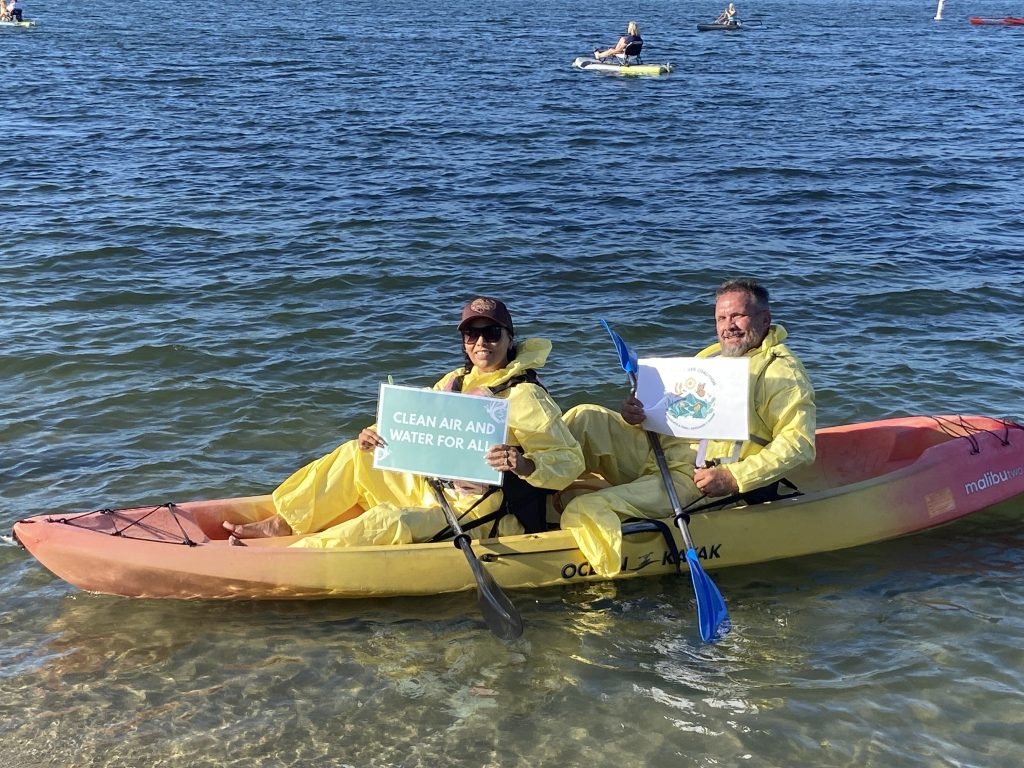
As a drone flew overhead, capturing images of the signs like: “Students for Clean Air and Water;” “Stop Sewage Pollution;” and “Voters Care,” approximately 40 people watched the paddle-out from the beach.
San Diego Climate Week nonprofits resource fair
After the paddle out, climate week participants headed to the Coronado Community Center where they were treated to a meal consisting of vegan burritos and kombucha.
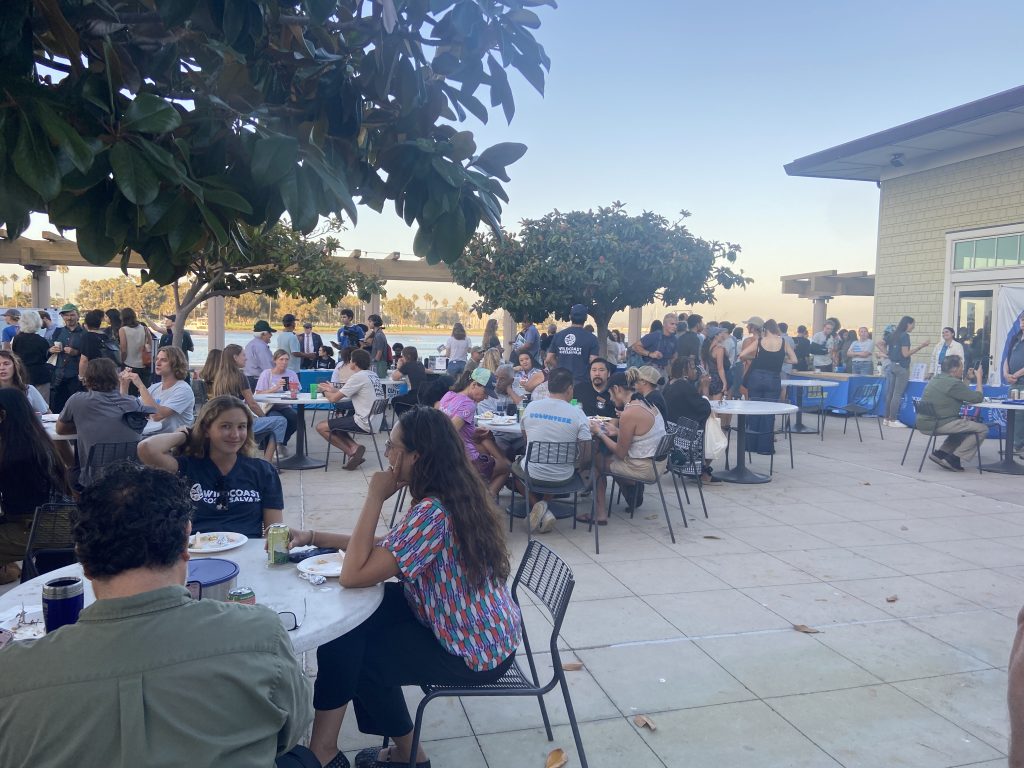
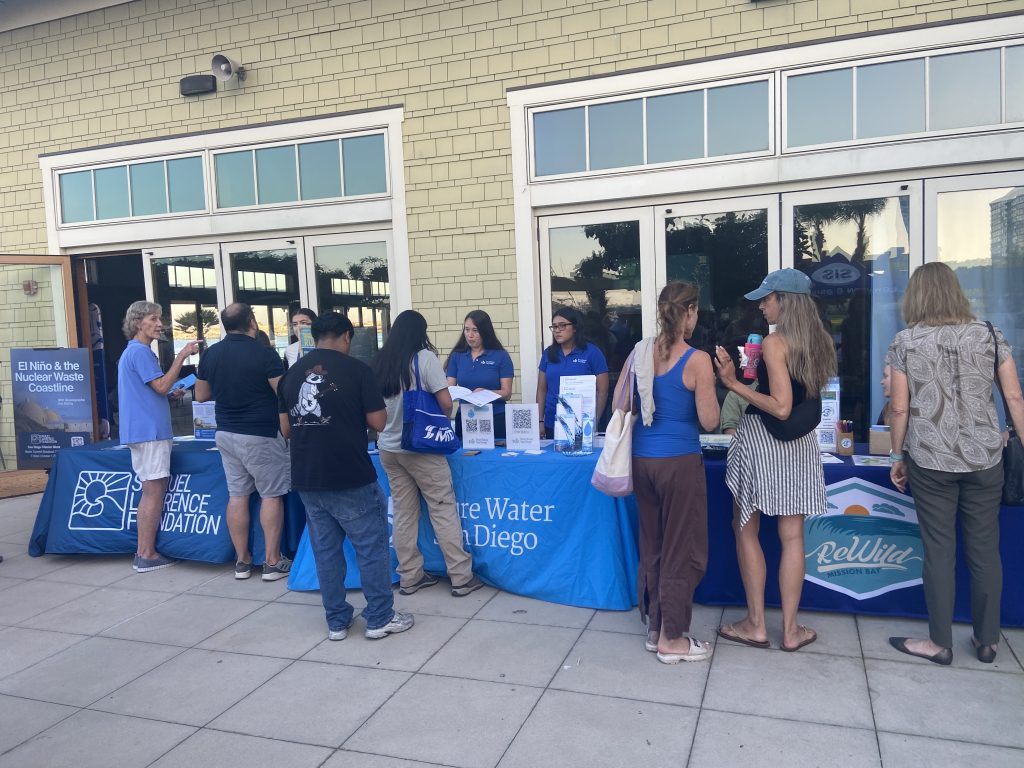
A nonprofit resource fair was set up in the courtyard with representatives from Surfrider Foundation, Wildcoast, Samuel Lawrence Foundation, Paddle for Peace, San Diego Coastkeeper, Sierra Club San Diego, Four Our Neighborhood, Red Earth Movement, Emerald Keepers, Un Mar de Colores, 4 Walls International, AgX, Tijuana River Coalition, SunMud, and Ocean Connectors.
Tri-national Water Summit on the Tijuana River sewage crisis
Following the resource fair, a panel discussion was held inside the community center on recent efforts to mitigate the Tijuana River crisis. The panel was moderated by Serge Dedina, Wildcoast executive director, and included: Paloma Aguirre, San Diego Board of Supervisors; Steve Padilla, CA State Senate; Phillip Musegaas, San Diego Coastkeeper; Bobby Wallace, Kumeyaay Nation; and Octavio Lopez, Wildcoast-Costa Salvaje International Team.

Musegaas explained that San Diego Coastkeeper’s water quality tests on the Tijuana River discovered two dozen different chemicals, attributed to industrial manufacturing pollution, including benzene, heavy metals, and industrial solvents.
Musegass emphasized that the Tijuana River pollution crisis is much more than sewage. Many of the industrial pollutants are carcinogens and they flow freely into the Pacific Ocean. SD Coastkeeper’s next steps include identifying the companies that own the polluting maquiladoras, many of which are headquartered in the U.S. Maquiladoras are factories on the Mexican side of the border which manufacture products for export, often taking advantage of lower labor costs and less stringent regulations.
Senator Steve Padilla, California 18th Senate District, described legislative efforts to hold California-licensed businesses that operate maquiladoras in Tijuana accountable for following environmental regulations because the pollution impacts the United States. Although his last effort was unsuccessful, he will continue the fight. He emphasized that we must use “every lever” to combat this crisis.
SB 58 progress on Hydrogen Sulfide air pollution
Paloma Aguirre, San Diego Board of Supervisors 18th District, discussed the epidemiological study conducted by UC San Diego and published in Science in 2026. Hydrogen sulfide is a pollutant found in raw sewage and emits the “rotten egg” smell that can cause headaches, neurological, and respiratory problems. The study proved that hydrogen sulfide underwent a water-to-air transfer at the turbulent “hot spot” on Saturn Avenue and led to nighttime atmospheric hydrogen sulfide peaks thousands of times greater than typical urban levels.
The hot spot was formed by old flood control structures, originally designed to protect the Tijuana River Valley. Riprap from this structure causes Tijuana River water to cascade over rocks, which allows the contaminants to become airborne aerosol pollutants. Aguirre stated that getting the hot spot removed was a top priority.
The UC San Diego study, and efforts of the Tijuana River Coalition, led to the passage of SB 58, authored by Senator Steve Padilla. SB 58 was signed into law by Governor Newsom this month. Prior to this bill, hydrogen sulfide air pollution was treated largely as an odor nuisance. SB 58 recognizes the health risks posed by hydrogen sulfide.
SB 58 requires the State Air Resources Board (SARB) to develop a response framework for hydrogen sulfide. In addition, the Office of Environmental Health Hazard Assessment must update the acute and chronic reference exposure levels for hydrogen sulfide and develop additional health guidance values for the pollutant. As part of developing the framework, SARB must conduct at least three public workshops, including at least one located in the Tijuana River Valley region, at least one located in the Salton Sea region, and at least one selected in consultation with a community that has experienced significant hydrogen sulfide exposure.
Future efforts to combat Tijuana River pollution crisis
Future legislation to address the Tijuana sewage crisis included the ½ cent county-wide sales tax Measure B, San Diego Health and Safety Act. Measure B expenditure plan says 22.5 percent of the money should be used on environmental mitigation and related programs in connection with the toxic crisis in the Tijuana River Valley. Twenty percent of that must be spent on infrastructure and engineering projects to stop sewage flows from Tijuana into the U.S.
Octavio Lopez, CEO of Nación Verde, has partnered with Wildcoast-Costa Salvaje International Team on revegetation and large scale restoration in the Tijuana River Valley. Sedimentation, caused by erosion of the steep cliffs of the river valley, is a major problem for sewage treatment plants and other mitigation efforts. By planting vegetation, Lopez explained that erosion is reduced and infiltration into the soil increased. He also discussed how increasing wetlands helps treat organic sewage. His group works on wetlands projects throughout Mexico because the cost of electricity and the specialized labor required to run sewage treatment plants is often a cause of their failure to operate as designed.
After having opened the panel with a discussion of Kumeyaay presence in the region, Bobby Wallace closed with a description of the original Tijuana River Valley baseline. It was “lush and green with diversity,” he said.
How to get involved in San Diego Climate Week 2026
Intrigued by SD Climate Week? It’s not too late to get involved. The San Diego Climate Week website includes a list of other events and how to sign up. In Coronado, Emerald Keepers will host a community cleanup at Tidelands Park on Saturday, October 3, at 8 a.m.