




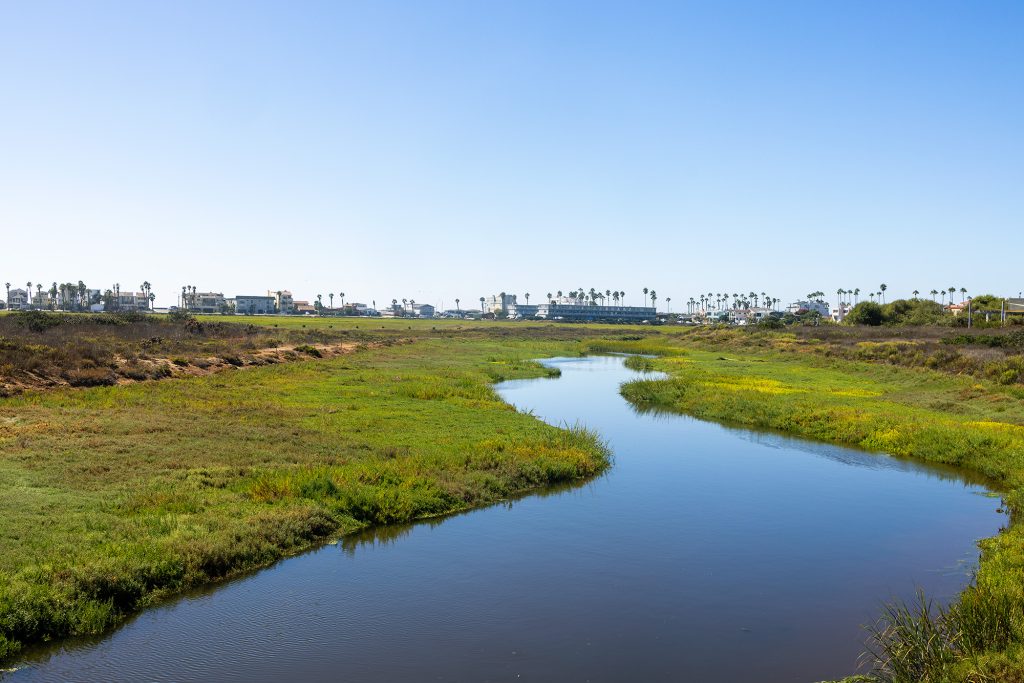
San Diego County leaders are not ready to give up the fight to have the Tijuana River Valley investigated as a potential Superfund site.
After a unanimous vote on Sept. 30, the county’s Board of Supervisors will ask for $1.4 million from the San Diego Regional Water Quality Board to test for and assess the extent of ground pollution related to the decades-long Tijuana sewage crisis.
The goal of the study is to convince the Environmental Protection Agency (EPA) to declare the river valley a Superfund site. In January, the EPA declined to investigate the area, saying there was insufficient evidence of its need.
At the time, Supervisor Terra Lawson-Remer, who led the initial request to the EPA, said she wasn’t ready to give up, and that the EPA based its decision on limited data that was more than six years old.
Now, Lawson-Remer is trying again. She and Supervisor Paloma Aguirre led this week’s proposal for the new study.
A Superfund site is a contaminated area designated and remediated by the EPA. The program was established by the Comprehensive Environmental Response, Compensation, and Liability Act of 1980, but it is colloquially known as “Superfund.”
The EPA in January said that Superfund sites are designed for hazardous, not human, waste. But Lawson-Remer and her supporters say there has been no comprehensive soil study conducted in the Tijuana River Valley.
“The reason this is so important is because the only path to clean up any kind of contamination in the Tijuana River Valley that’s deep and long-standing in the soil would be a Superfund designation,” Lawson-Remer said. “At the time (when) the EPA denied our request, they came and said to us that they did not have enough evidence at the time to grant a preliminary investigation. I think that is wrong.”
Regardless, Lawson-Remer said, the proposed study presents an “opportunity to build a deeper and broader evidence base” by testing for heavy metal, pesticide, pharmaceutical, and other pollutants. If such pollutants are there, she argued, the county could make a renewed case to the EPA for Superfund status.
The proposed study was met by both support and criticism.
Supporters said the study would pave the way for understanding — and, if necessary, remediating — pollution in the Tijuana River Valley and helping to address long-term health and environmental concerns in the areas.
Repairs are now underway to fix and expand the crumbling infrastructure that causes millions of gallons of untreated wastewater from Tijuana to be dumped into the river and ocean each day. However, some are concerned that even when the flow of sewage stops, the soil will be left seeped in pollutants.
Critics of the proposed study expressed fatigue at a seemingly endless cycle of studies (such as this one, and this one) rather than actions. Others said the responsibility for remediation falls on Mexico’s shoulders.
The Board of Supervisors supported the request unanimously, a change in tone from October 2024, when the board rejected Lawson-Remer’s initial request to ask the EPA to investigate the area in a 3-2 vote. Supervisors were not opposed to the notion, but asked for 90 days to consider it, citing concerns about how the designation could impact the South Bay.
In the meantime, Lawson-Remer created a petition, which received more than 500 signatures. In January, the EPA responded, saying that the Tijuana River Valley was ineligible for Superfund designation.
“The Superfund program is geared toward dealing with hazardous waste, not human waste,” said Mike Montgomery, the division director for the EPA’s Superfund and Emergency Management Division, at the time.
If the San Diego County Regional Water Board agrees to fund the study, it is expected to take two years to complete once started. This timeline allows for sampling across different seasons, neighborhoods, and sample sites to assess the Tijuana River Valley’s soil and sediment.


What the current EPA chooses to do is ignore the toxic waste from US-based manufacturing in Tijuana. Shame on both the state and feds for not pursuing in the past. The fix is bi-national. Kudos to our Board of Supervisors for continuing to pursue.